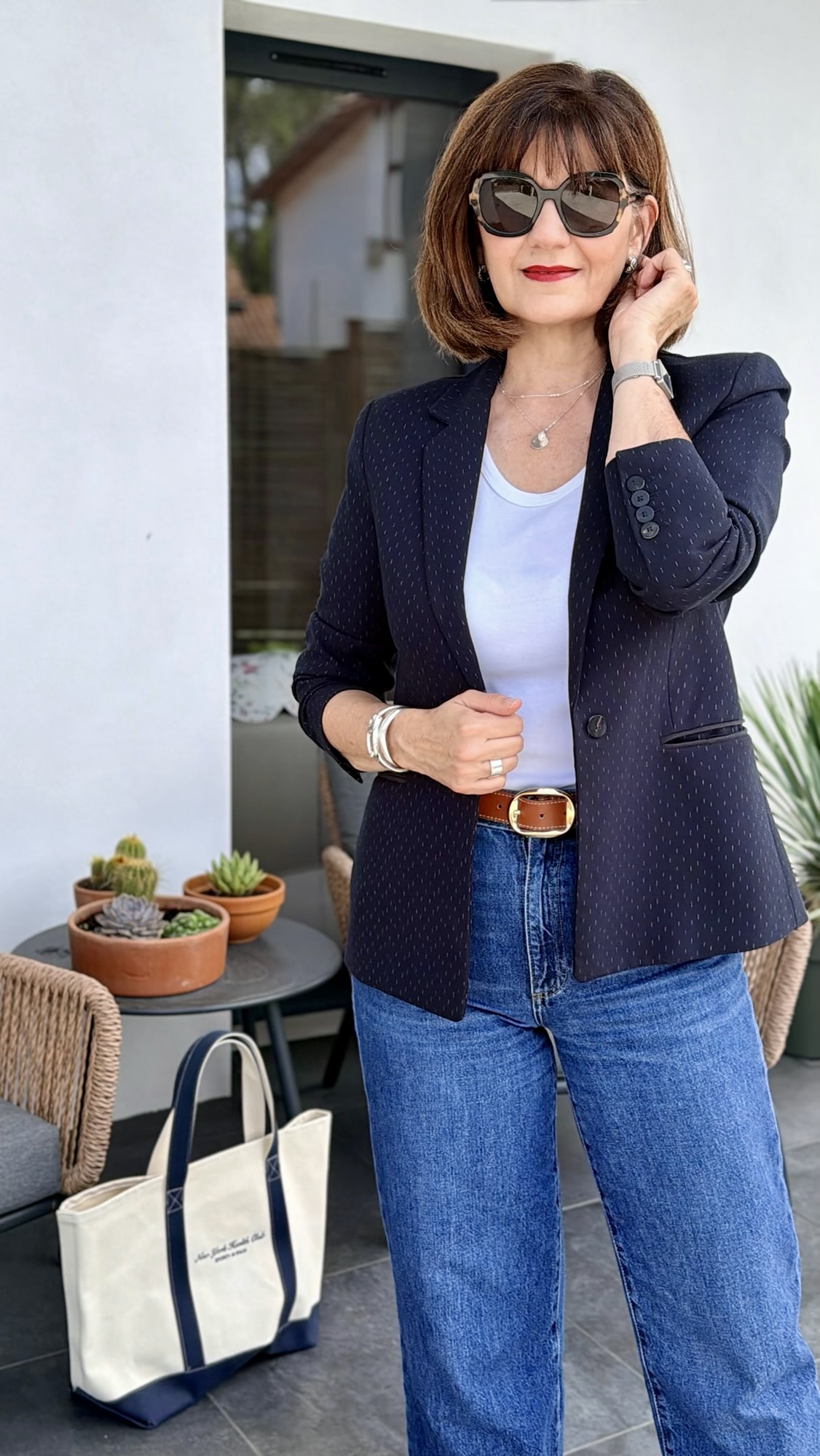
If I could choose only one blazer, I would recommend a navy one. Why? Because it offers all the elegance of a black blazer while often being softer and more flattering, especially after 50, 60, and beyond. A black blazer is certainly chic, but it can sometimes make the features look harsher and emphasize shadows around the face. Navy has the same polished effect, yet brings more softness to the complexion.
It is also one of the most versatile pieces in a wardrobe. A well-cut navy blazer adds structure to a casual outfit, works just as well for dressier occasions, and pairs easily with most colors. It can be worn throughout much of the year and never feels tied to a passing trend.
The navy blazer is undoubtedly one of the most emblematic pieces in a French woman’s wardrobe. It reflects the way French women often approach dressing: polished without looking overly formal, timeless without feeling predictable and elegant without appearing overdone. Worn with straight-leg jeans, a crisp white shirt, a Breton top, or tailored pants, it brings structure to an outfit while preserving the effortless quality that defines modern French style.
The real question is how to style it so that it looks modern rather than overly classic. This guide covers the most flattering color combinations, the best pieces to wear with it, and easy outfit ideas for different occasions.

How to style a navy blazer
Why a Navy Blazer Never Goes Out of Style
The blazer has long been one of the foundations of a woman’s wardrobe. Its tailored construction defines the shoulders, gives shape to the upper body and brings a polished finish to even the simplest outfit. Worn open, it also creates clean vertical lines that can visually lengthen the silhouette.
Along with jeans, blazers are among the pieces I wear most. I own around fifteen in different colors, fabrics, and cuts, from lightweight summer styles to more structured wool versions. Each one suits a particular season or occasion, but the navy blazers are invariably the ones I reach for most often.
Their color is one of the main reasons. It pairs naturally with white, cream, gray, camel, cognac, chocolate brown, and khaki, and works effortlessly with every shade of denim. There is no need to find an exact match between the jacket and the jeans.
Navy also provides the perfect balance for brighter colors. It gives red a more refined edge, tones down the sweetness of pink and fuchsia, and works beautifully with emerald green, coral, mustard, or sky blue. Unlike black, it anchors stronger shades without creating an overly harsh contrast.
The fabric and cut determine how timeless a navy blazer will feel. A matte wool blend, cotton twill, substantial linen, or lightly textured fabric is generally more versatile than a shiny material that resembles part of a formal suit. A clean shoulder line, balanced lapels, and a lightly structured shape will also age better than exaggerated shoulders or proportions closely tied to a particular season.
Details can change its personality without compromising its versatility. Gold buttons, a crest, or a double-breasted cut give it a more nautical or preppy character, while discreet buttons and a single-breasted silhouette create a quieter, more understated look.
Why I Own More Than One Navy Blazer
I own several navy blazers because each one creates a different effect. A softly tailored style feels more relaxed, while a structured version gives an outfit a sharper, more polished line. A lightweight cotton or linen blazer works well in warmer weather, whereas wool brings more depth and structure during the colder months.
Many elegant French fashion brands reinterpret the navy blazer each season, but the most successful designs always retain a timeless cut and beautiful fabric.
The shade of navy also changes the overall look. Some are so dark they almost resemble black, while others are brighter, softer, or slightly faded. These differences in cut, fabric, and color allow me to wear a navy blazer often without feeling as though I am repeating the same outfit. Paired with jeans, it has become one of my signature pieces.


how to style a navy blazer
How to Style a Navy Blazer: 5 Timeless Outfit Ideas
The navy blazer may be a classic, but the way it is styled determines whether it feels traditional, relaxed, or modern. Pants shape the proportions, fabrics set the mood, and shoes and accessories give the outfit its final character. These 5 combinations show how to wear it after 50 without looking overdressed or predictable.
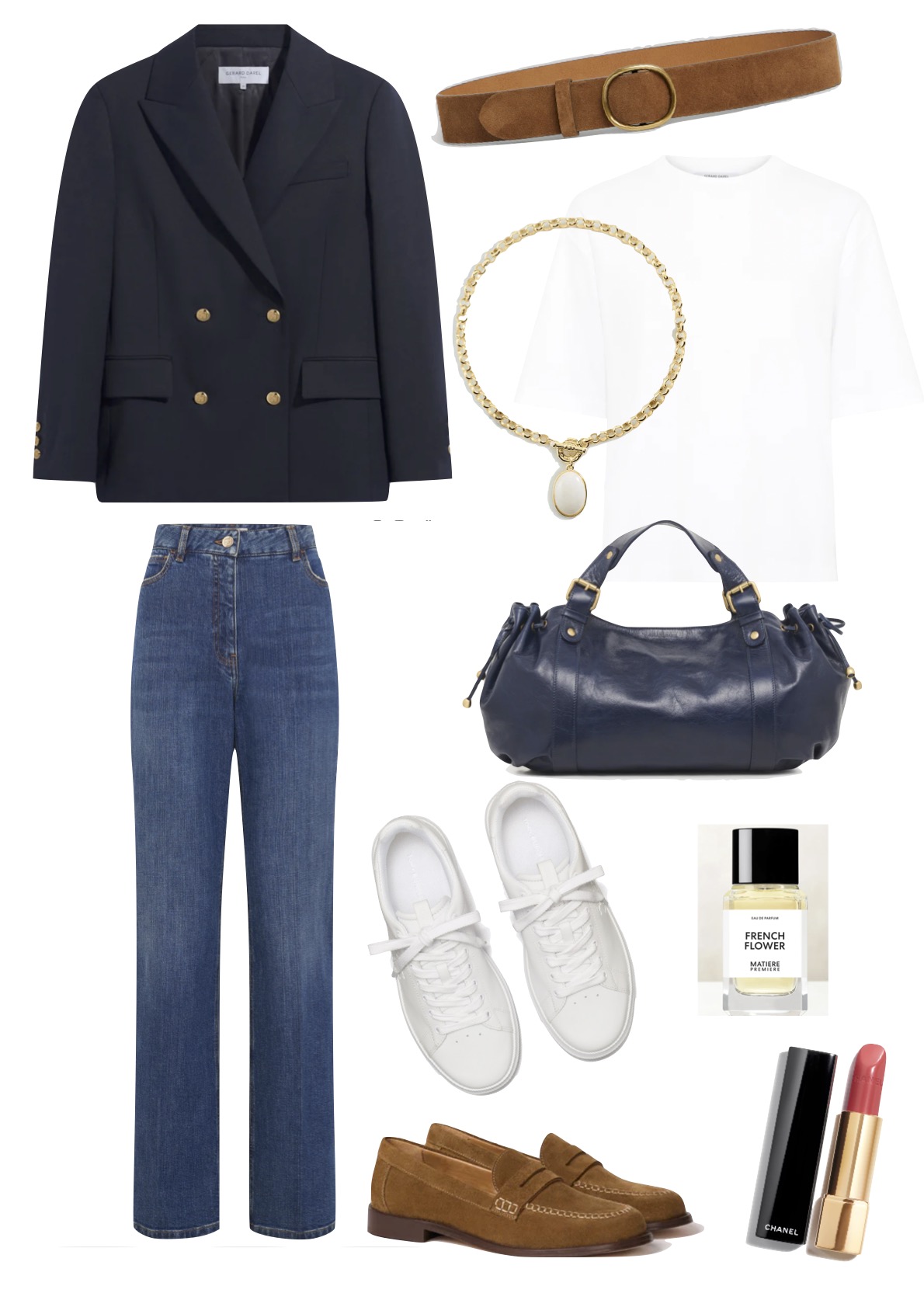
1/ Navy Blazer with a Straight-Leg Jeans and a White T-Shirt
This is probably the most reliable way to wear a navy blazer. A white T-shirt keeps the outfit relaxed, while straight-leg jeans create a clean line that works with both fitted and slightly oversized jackets.
The quality of the T-shirt matters. A substantial cotton fabric, a flattering neckline, and sleeves that cover the upper arm neatly will look more polished than a thin, shapeless style. Finish with white leather sneakers for daytime or loafers for a smarter version.
Blazer : Gérard Darel – T-shirt : Gérard Darel – Jeans : Gérard Darel – Belt : Gérard Darel – Handbag : Gérard Darel – Sneakers : Tory Burch – Loafers : Pied de Biche – Necklace : Agatha – Lipstick : Chanel – Perfume : Matière Première
how to style a navy blazer
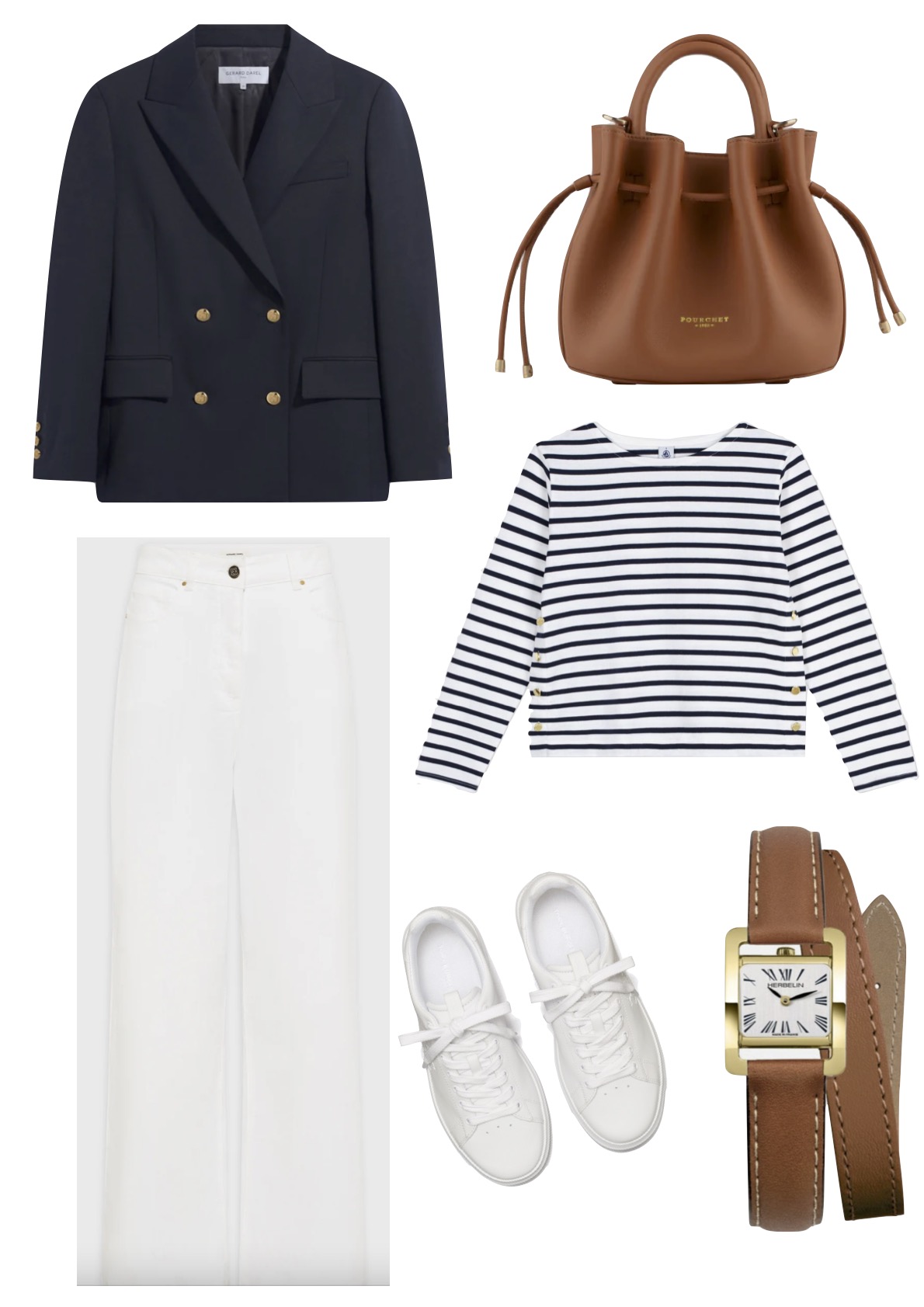
2/ Navy Blazer with a White Pants and a Breton Striped Top
The combination of navy, white, and stripes has a natural seaside influence, but it should not be reserved for vacations by the coast. It works just as well in the city and remains one of the easiest ways to create a fresh, polished outfit.
Choose straight or wide-leg white pants rather than a very tight cut. A striped top with a white or cream background brightens the face, while camel or cognac accessories add warmth and keep the look from feeling too nautical.
Blazer : Gérard Darel – Pants : Gérard Darel – Breton striped shirt : Petit Bateau – Sneakers : Tory Burch – Watch : Herbelin – Bag : Pourchet
how to style a navy blazer
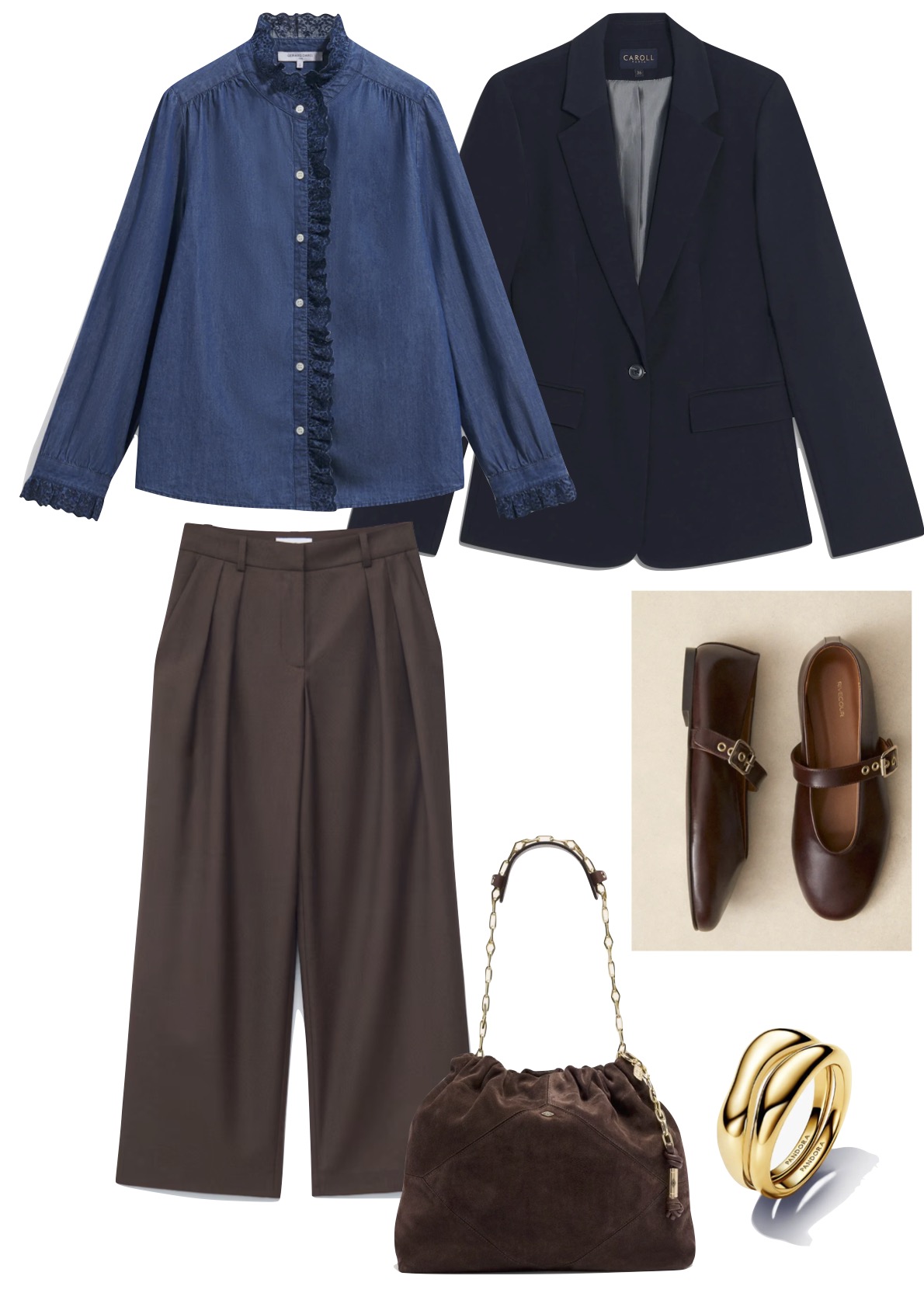
3/ Navy Blazer with a Chocolate Brown Pants and a Denim Shirt
Navy and chocolate brown are a sophisticated alternative to the more predictable navy-and-beige combination. The two dark colors have enough contrast to remain distinct, while a denim shirt brings modernity.
This palette is particularly beautiful in fall and winter, especially with suede, wool, or corduroy pants. A cognac bag and gold jewelry create a subtle connection between the cooler navy and the warmer brown.
Blazer : Caroll – Pants : Stories – Denim Shirt : Gérard Darel – Handbag : Ba&sh – Shoes : Rivecour – Jewelry : Pandora
how to style a navy blazer
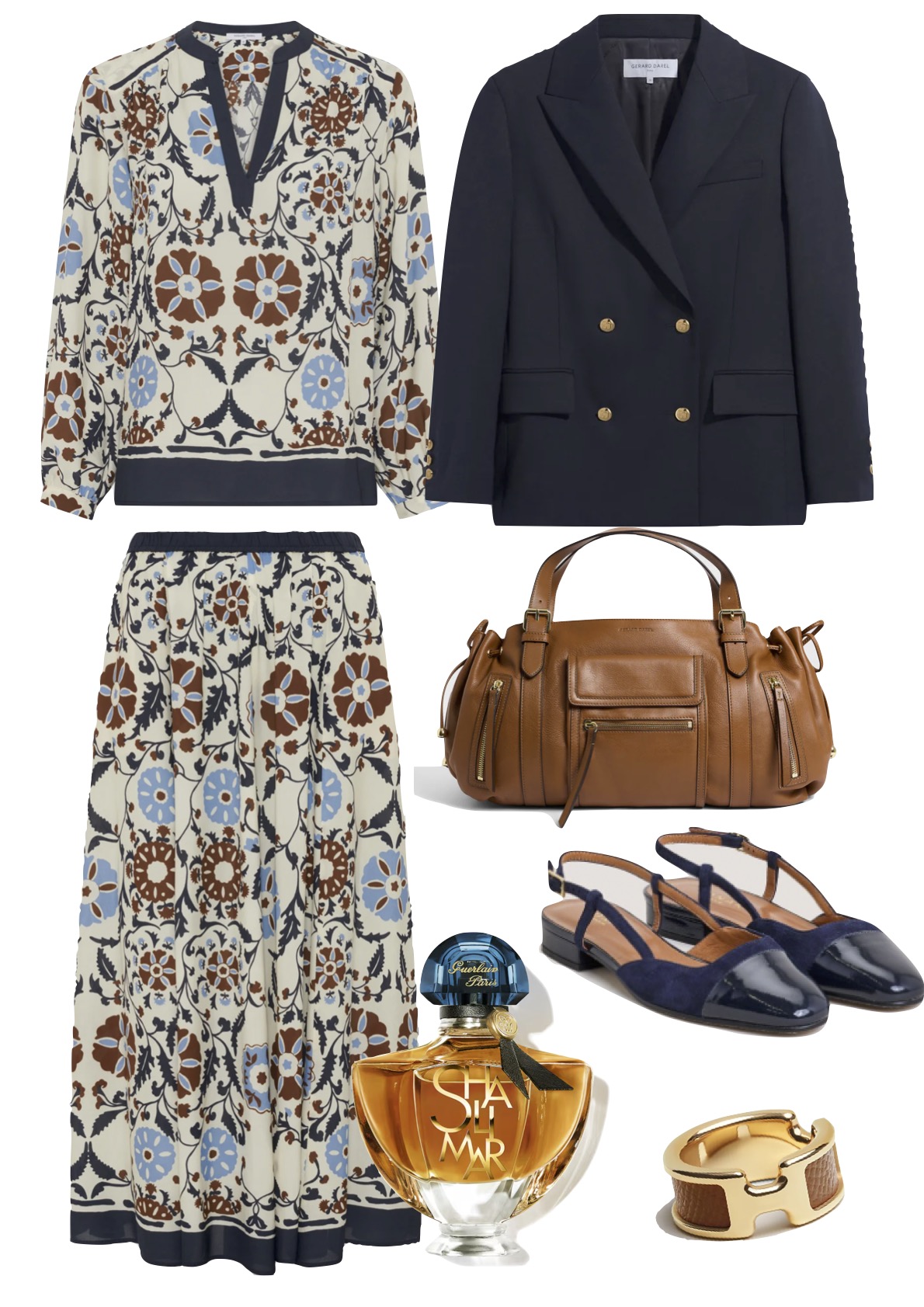
4/ Navy Blazer with a Midi Skirt or Dress
A midi skirt or dress brings movement to the clean, tailored lines of a navy blazer. The most modern combinations rely on contrast: a structured jacket over a satin skirt, a fluid printed dress, or a softly pleated silhouette.
Rather than matching the two pieces too carefully, let one of them set the tone. A simple navy blazer can calm a bold print, while gold buttons or a sharper cut give a plain dress more character. Keep the jacket open, show a little of the waist, and choose shoes according to the mood you want to create: sneakers for a relaxed look, loafers for daytime polish, or boots for a stronger silhouette.
Midi Skirt : Gérard Darel – Blouse : Gérard Darel – Blazer : Gérard Darel – Slingback : Jonak – Handbag : Gérard Darel – Ring : Hermès – Perfume : Guerlain
how to style a navy blazer
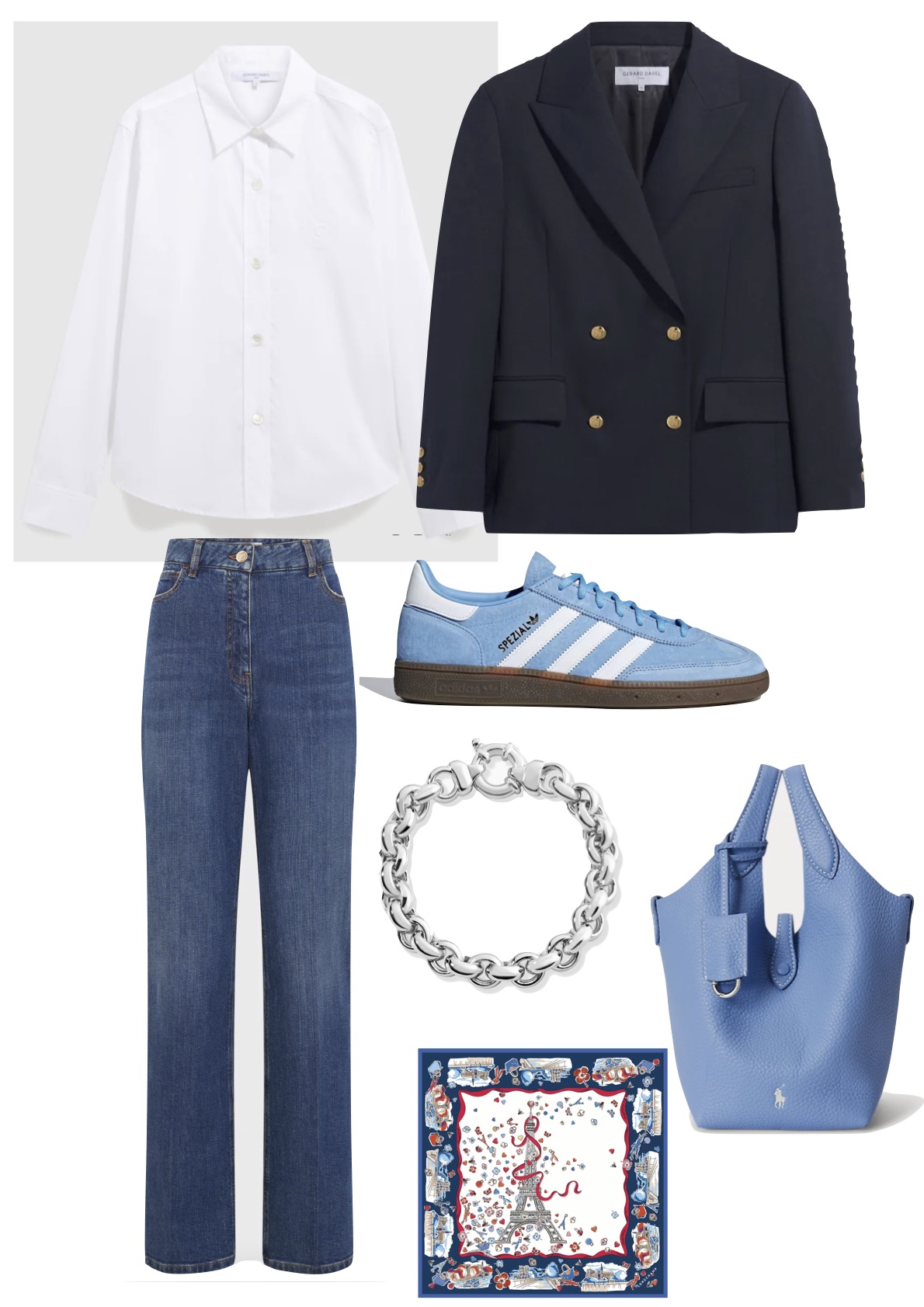
5/ Navy Blazer with a white shirt
A white shirt and a navy blazer may be a classic combination but it never has to feel predictable. A crisp cotton shirt gives the outfit a sharper, more tailored edge, while a softer or slightly oversized style creates a more relaxed silhouette.
Leave the collar open, turn back the cuffs, and allow a little white to show beneath the blazer sleeves to break up the navy. Straight-leg jeans keep the look effortless, while tailored or wide-leg pants make it more polished. A cognac bag, gold jewelry, or a silk scarf adds warmth and gives the outfit a more personal finish.
Blazer : Gérard Darel – Shirt : Gérard Darel – Jeans : Gérard Darel – Sneakers : Adidas – Bracelet : Histoire d’or – Handbag : Ralph Lauren – Scarf : Longchamp Paris
how to style a navy blazer
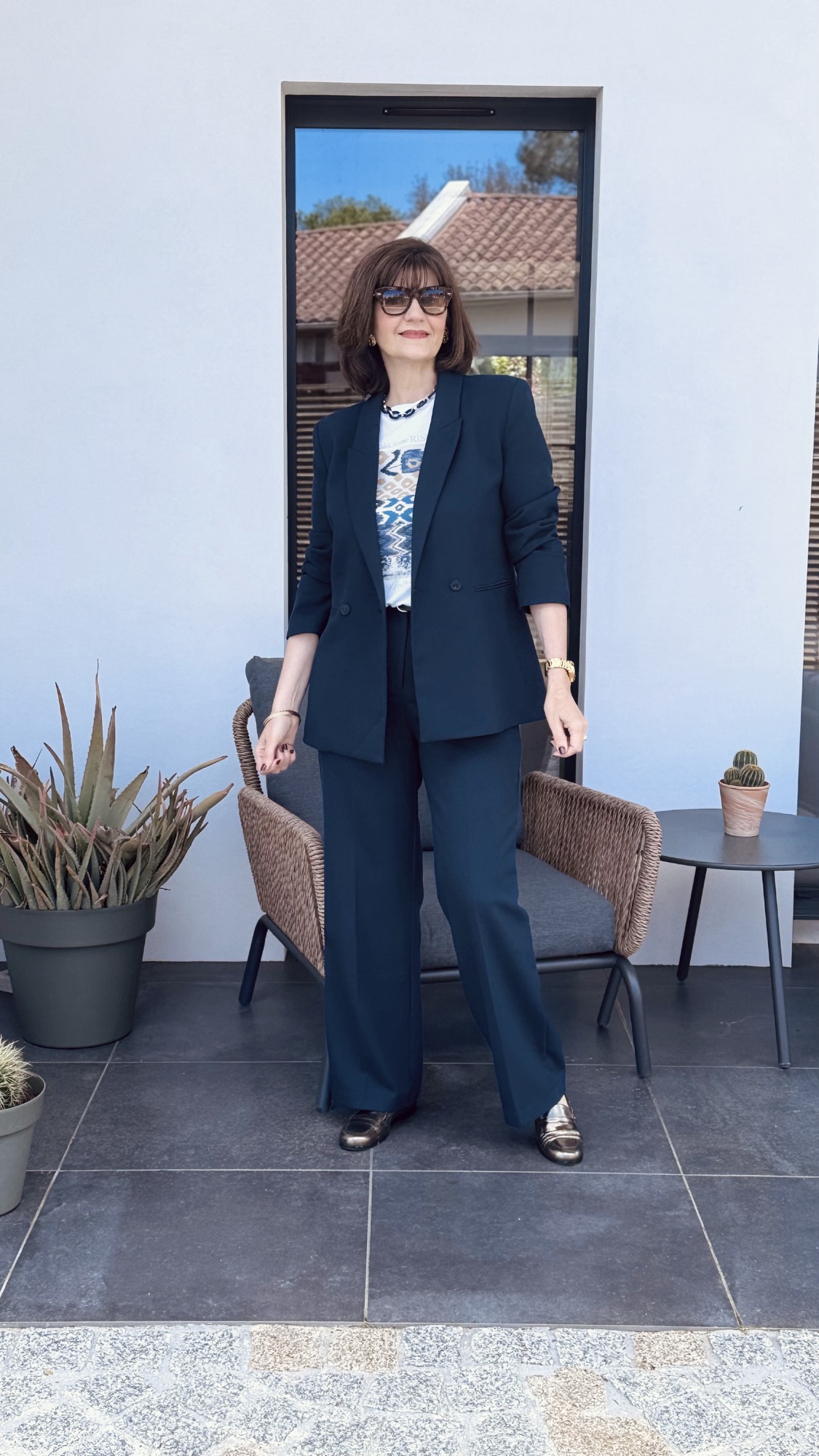
How to Wear a Navy Pantsuit Without Looking Too Formal
What about a navy pantsuit? Is it worth adding one to your wardrobe or does it always look a little too formal? The answer lies less in the suit itself than in the way its proportions are handled.
Start by wearing the blazer with the pants designed to match it. Two similar but not identical shades of navy often look like a mistake, unless the contrast in texture is deliberate and clearly visible. A matte wool blazer with satin pants, for example, can work, two almost matching suiting fabrics usually do not.
The cut of the pants is equally important. A straight or fluid wide-leg shape gives the suit a more contemporary line, while very slim pants combined with a fitted blazer can quickly feel corporate. The jacket should skim the body rather than pull at the waist, and the pants should fall cleanly over the shoes without breaking into heavy folds
Underneath, avoid anything that reinforces the office uniform. A white T-shirt, a fine crew-neck knit, a polo, or a lightweight sweatshirt creates a more relaxed contrast with the tailoring. The same principle applies to shoes: loafers, minimalist sneakers, or sleek ankle boots make the suit easier to wear during the day than classic pumps.
The most convincing navy pantsuits are not dressed down with too many casual details. One or two are enough. A simple top and modern shoes usually do more for the silhouette than rolled sleeves, a scarf, a statement bag and jewelry all worn at once.
The same principles of proportion, fabric, and relaxed styling also apply when learning how to style a linen suit for warmer weather.

how to style a navy blazer
The Handbags That Work Best With a Navy Blazer
The best handbag color depends partly on the shade of the blazer. A very dark, cool navy can look almost black, while a brighter navy feels lighter and more casual. The goal is to choose a bag that either warms the outfit, creates contrast or continues the same color story.
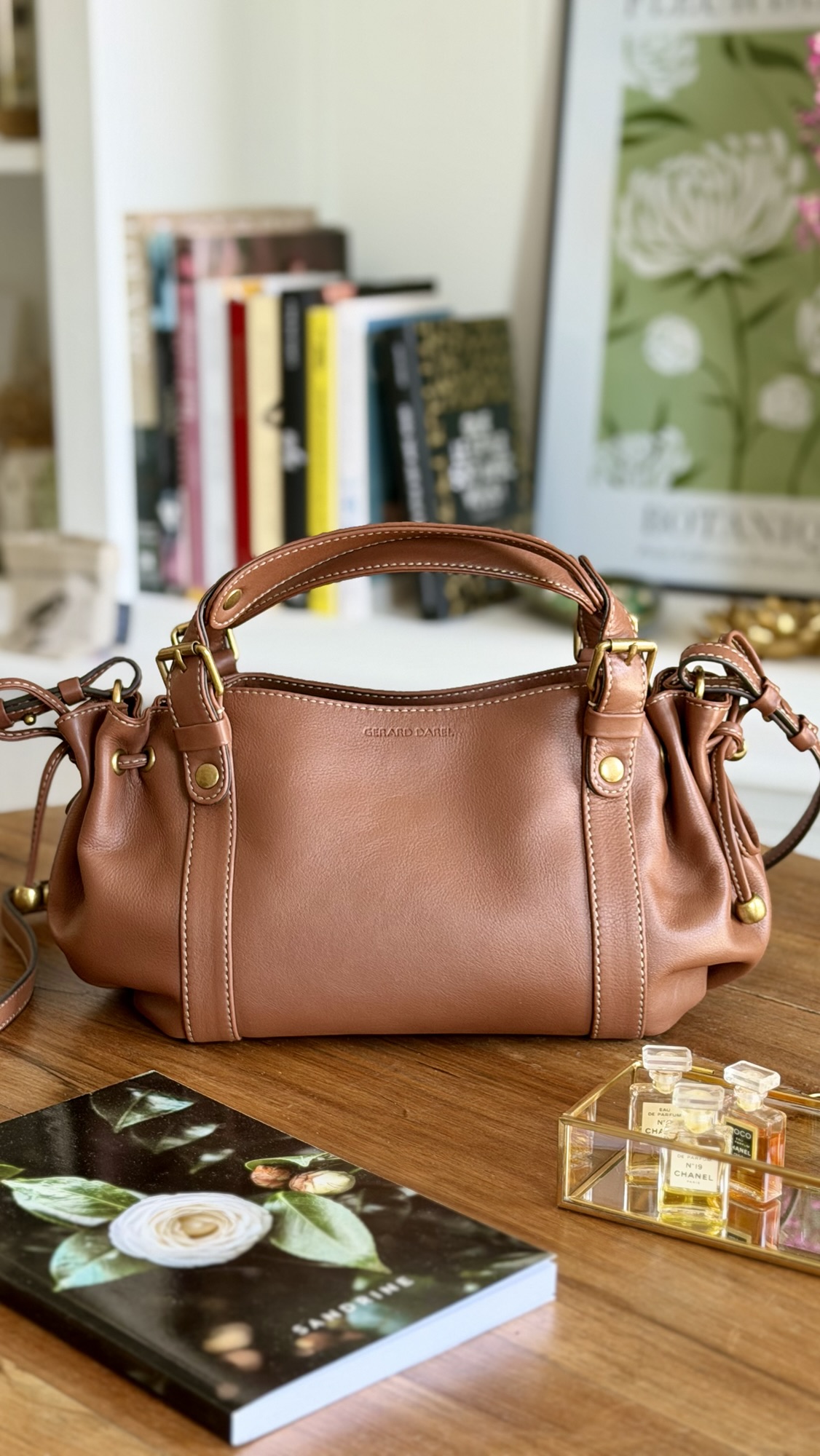
Camel, tan, and cognac are the easiest choices. They warm up a dark navy blazer and work especially well with denim, white pants, beige, or cream. Camel feels soft and versatile, tan is slightly more casual, and cognac adds greater depth.
For a lighter look, cream, ivory, and ecru are particularly effective with a brighter navy. They work beautifully in spring and summer, especially with white jeans, pale denim, or a Breton striped top. A structured leather bag keeps the combination polished, while raffia or woven leather gives it a more relaxed feel.
Burgundy is an excellent alternative to brown. It adds color without overpowering the outfit and pairs well with gray, cream, denim, and camel. Red, raspberry, or fuchsia can also work, but they are best used as the single strong accent in an otherwise simple look.
Chocolate brown, forest green, and olive create richer combinations for fall and winter. Chocolate softens navy, while dark green brings color in a discreet way. A black handbag is also possible, but it works best when black appears elsewhere in the outfit; otherwise, the result can feel unnecessarily heavy.
A navy bag creates an elegant tonal look, provided there is some contrast in shade or texture. Grained leather, suede, or a glossy finish will prevent the outfit from looking flat. For evening, gold, bronze, champagne, or silver can add light without competing with the blazer.
There is no need to match the handbag exactly to the shoes or belt. A cognac bag can be worn with chocolate loafers, while a burgundy bag works perfectly with navy shoes. The outfit will look more modern when the colors complement one another rather than matching perfectly.
If you are building a versatile handbag collection, discover the 6 handbag styles every woman should own and how to choose the right color for your wardrobe.
how to style a navy blazer
How to Choose the Right Navy Blazer
Navy blazers vary considerably in cut, fabric, construction, and color. The right one should suit your proportions, work with the clothes you already own and remain comfortable throughout the day.
Start With the Shoulder
The shoulders are the first thing to check because they are difficult to alter. The seam should sit close to the natural edge of the shoulder, without pulling across the back or collapsing beyond the arm. When the blazer is buttoned, the front should lie flat, with no horizontal creases around the fastening.
Move your arms forward, sit down, and cross them during the fitting. A blazer may look perfect while you are standing still but feel restrictive once you begin to move. Try it over the type of shirt or fine sweater you expect to wear underneath rather than over a very thin fitting-room top. A beautifully fitted blazer is also one of the simplest ways to look more polished without making an outfit feel overly formal.
Choose the Cut According to the Effect You Want
A single-breasted blazer is generally the most versatile. It creates a clean vertical line and works easily with jeans, tailored pants, dresses, and skirts. A double-breasted cut has more visual presence and often looks sharper but it can add volume at the front, particularly when worn closed.
A lightly shaped waist creates definition without feeling too formal. A straighter cut gives a more relaxed, contemporary look, while a strongly fitted blazer can feel restrictive and may be harder to layer.
Length should be considered in relation to the rest of the outfit. A shorter blazer works particularly well with high-waisted pants because it keeps the proportions clear and makes more of the leg visible. A hip-length style is the most adaptable. A longer blazer creates a leaner line but the hem should not stop exactly at the widest part of the hips.
Check the Fabric With Your Hands, Not Just the Label
Fiber content does not tell the whole story. Two wool blazers can feel completely different depending on the weave, weight, and construction. Gently squeeze the fabric in your hand: it should recover its shape rather than remain heavily creased.
For fall and winter, wool and wool blends provide warmth and structure. Cotton twill is useful for transitional weather and usually feels less formal. Linen is comfortable in summer but a linen blend often keeps its shape better and wrinkles less than pure linen. Avoid fabrics that are very shiny unless you specifically want the look of a suit jacket.
The blazer should have enough substance to hang cleanly but not so much stiffness that it stands away from the body.
Inspect the Construction
Turn the blazer inside out before buying it. The lining should sit smoothly, without pulling, bunching or showing loose threads. A lining through the sleeves makes the jacket easier to put on over shirts and knitwear.
Check that:
– the pockets lie flat,
– the buttons are firmly attached,
– the buttonholes are neat,
– the lapels sit evenly,
– the hem does not twist,
– patterns or stripes align reasonably well at the seams.
Open the pockets carefully if they are only temporarily stitched closed. Some blazers have decorative pockets that cannot be used, which is worth knowing before purchase.
Choose a Navy That Works With Your Wardrobe
Navy is not a single color. Some shades are almost black, while others contain more blue, gray, or purple. A very dark, matte navy is the easiest replacement for black and usually feels more formal. A clearer blue looks fresher with white, light denim, camel, and summer fabrics. A slightly faded navy creates a softer, more casual effect.
Always examine the jacket in daylight. Artificial lighting can make a dark navy look black or conceal a purple undertone. Hold it next to the jeans, pants, or shoes you wear most often. The shade does not need to match them exactly but it should sit comfortably beside them.
Let the Details Serve a Purpose
Details should support the way you intend to wear the blazer. Gold buttons immediately give it a nautical or preppy character and work especially well with denim, white pants, striped tops, loafers, and espadrilles. Tonal, dark, or horn-effect buttons are quieter and make the jacket easier to dress up or down.
A subtle pinstripe, woven texture, contrast stitching, or small crest can add personality but several decorative elements at once may limit the number of outfits the blazer works with.
Before buying, ask yourself whether the new blazer offers something your existing ones do not: a different length, a lighter fabric, a sharper shoulder, a more relaxed cut, or a distinct shade of navy. That is a better reason to add another one than a small change in buttons or trim.
Final Thoughts
A navy blazer may not seem particularly exciting at first glance. It doesn’t rely on bold colors, dramatic details or passing trends to attract attention. Yet that quiet versatility is precisely what makes it exceptional.
It has the rare ability to adapt to almost every occasion, every season and every stage of life. Worn with jeans, it feels relaxed. Paired with tailored pants, it becomes effortlessly elegant. Layered over a Breton top or a fine knit, it always looks considered without ever appearing overdone.
Fashion constantly encourages us to search for the next new thing. A navy blazer reminds us that some of the smartest purchases are the ones we continue wearing year after year.
If you’re wondering where to invest next, I wouldn’t suggest buying another trendy jacket. I’d recommend finding one beautifully tailored navy blazer that fits you perfectly.
Chances are, it will become the hardest-working piece in your wardrobe too.
NB : Links in this article are affiliate links. If you click and make a purchase, I may receive a small commission at no extra cost to you. It’s a lovely way to support my blog and my work. Thank you so much.
Muxu.