In France, September has a particular energy. We call it la rentrée: summer slowly comes to an end, everyday routines return, and suddenly we feel like getting dressed properly again. After weeks of lightweight summer clothes, I am always happy to rediscover my favorite pieces, richer fabrics, more structured silhouettes, and all the little details that make an outfit interesting.
September is also when the new fall collections arrive, and they inevitably make us look at our wardrobes with a more critical eye. Yet looking current doesn’t require starting over. Many of the clothes we chose carefully can remain relevant for years; often, what makes the difference is simply a new way of wearing them.
That feels particularly true for Fall 2026. Some of the season’s most interesting ideas come from styling rather than from a single must-have piece: new proportions, unexpected contrasts, layered looks, brooches, scarves, and the mix of romantic details with sharper tailoring.
This is also what I appreciate most about French style: choosing carefully, keeping beautiful pieces, knowing what truly suits us, and allowing a wardrobe to evolve naturally over time.
So before turning your fall wardrobe refresh into a shopping list, take another look inside your closet. You may find that a few thoughtful changes are enough to make familiar clothes feel fresh, modern, and much more personal.
Here are 10 ways to update your fall wardrobe, stay elegant, and rediscover pieces you may have stopped noticing.
NB : links in this article are affiliate links. If you click and make a purchase, I may receive a small commission at no extra cost to you. It’s a lovely way to support my blog and my work. Thank you so much.
How to update your fall wardrobe
1/ Before Deciding Something Is Dated, Change Its Context
One of the easiest mistakes to make at the beginning of a new season is to look at a garment we have owned for several years and decide that it is no longer fashionable. Quite often, however, the garment isn’t the problem. What has aged is the combination we keep recreating around it.
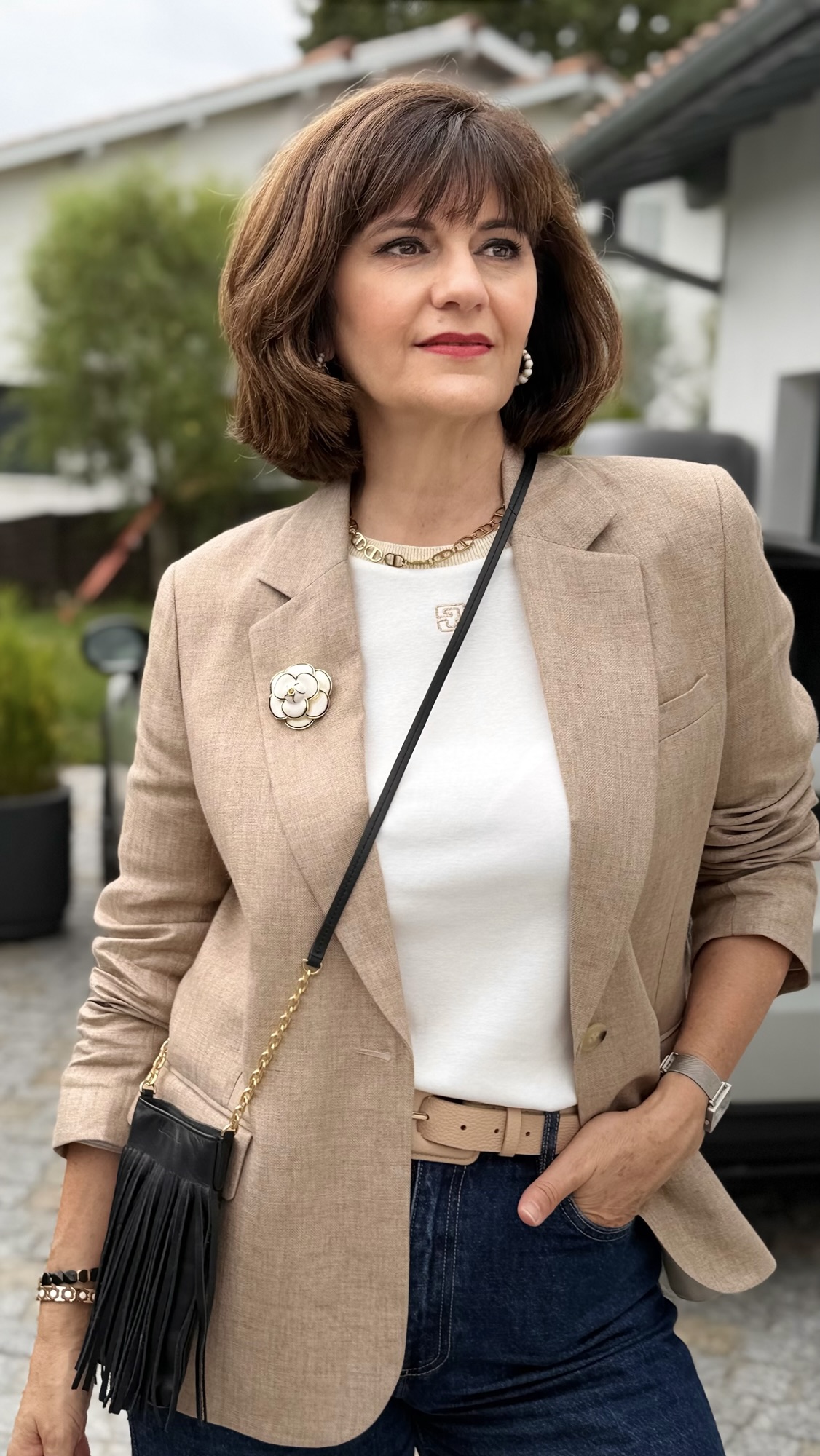
A tailored jacket worn year after year with the same blouse, pants, handbag, and shoes will inevitably begin to feel predictable. Separate those pieces and their potential changes immediately. The jacket might work with relaxed denim or a softer knit, while tailored pants once reserved for the office can take on a completely different character when everything around them becomes less formal.
This is why one of the best wardrobe exercises for fall costs absolutely nothing. Choose five pieces you haven’t worn much recently and deliberately refuse to recreate their usual outfits. Instead, look for contrast. Combine something masculine with something feminine, polished with casual, vintage with contemporary or structured with soft. This balance between timeless pieces and more contemporary styling is also something I explore in my guide to French style after 50.
Fall 2026 offers plenty of inspiration here. One of the recurring ideas on the runways and in street style is precisely this kind of juxtaposition: romantic details against tailoring, refined clothes mixed with utilitarian pieces, and familiar classics made less predictable through styling.
The lesson is useful far beyond one season. When an old favorite suddenly feels wrong, don’t immediately ask whether you should get rid of it. Ask whether you’ve simply run out of ideas for wearing it.
2/ Learn to Read Proportions, Not Just Trends
If an outfit feels dated even though you still like every garment individually, proportions are often the first thing worth examining. Fashion changes silhouette much faster than it changes the fundamental contents of a wardrobe, which is why perfectly good clothes can sometimes start to feel slightly wrong.
Fall 2026 is particularly interesting in this respect because designers have been playing with volume, length, shoulders and unexpected proportions rather than imposing one universal silhouette. That gives us much more freedom, but it also makes understanding our own proportions increasingly useful.
Instead of concentrating on the individual clothes, step back from the mirror and look at where everything ends. Where does the jacket fall in relation to the hips? Where is the waist visually positioned? Is there volume everywhere, or does one part of the silhouette provide structure? Most importantly, look at the relationship between the hem of your pants and your shoes.
A loose shirt worn with very wide pants, for example, can sometimes create too much volume and take away some of the definition of the silhouette. Tucking in the shirt, defining the waist slightly, or choosing a more fitted layer on top can help restore balance. But there is no universal formula, because proportion also depends on your body shape and your height.
A taller woman may find it easier to carry generous volumes on both the top and bottom, while the same combination can sometimes overwhelm a petite frame. Torso length, leg length, shoulder width, and where your natural waist sits can all affect the way an outfit looks.
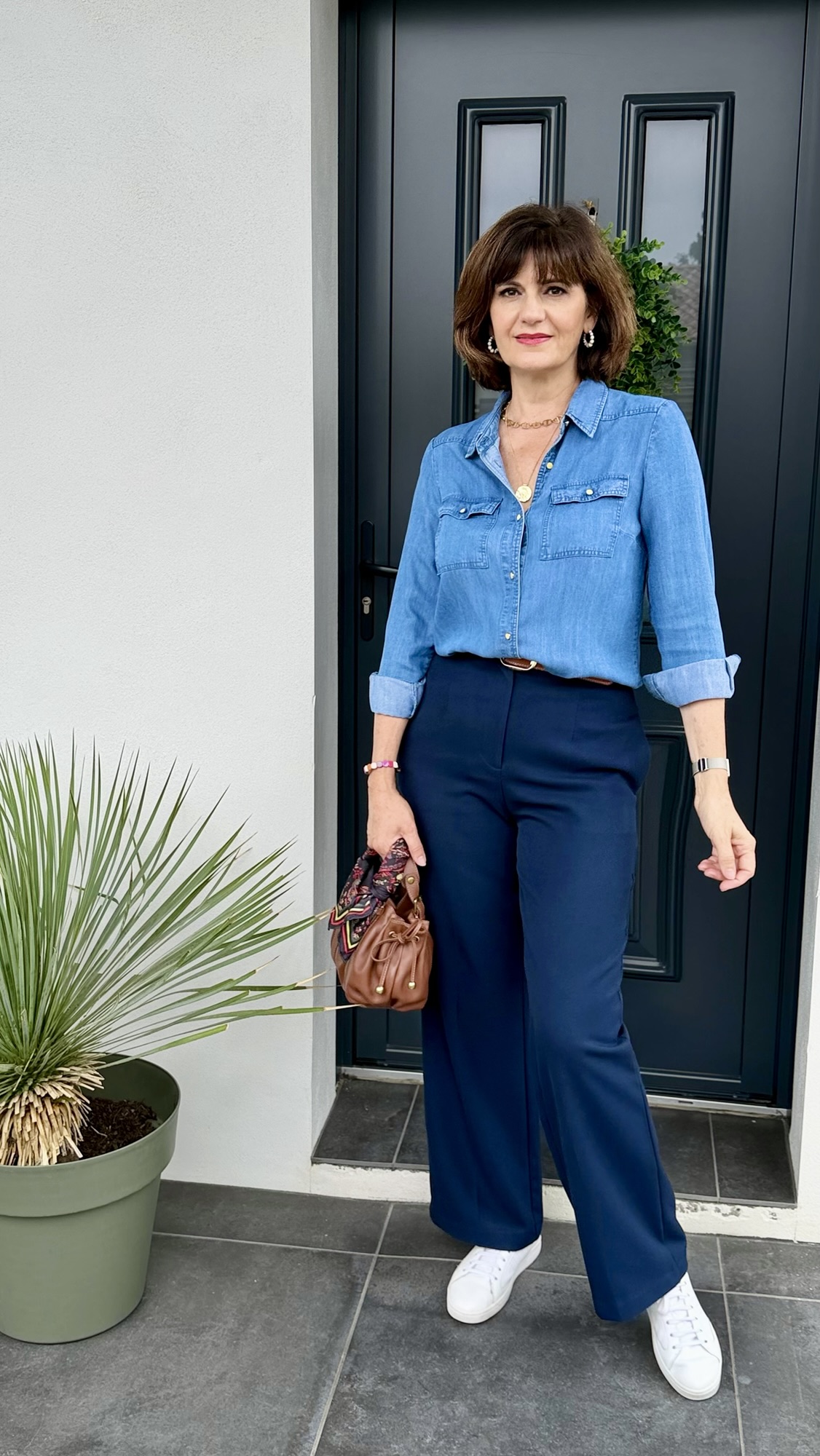
The goal isn’t to reproduce a runway or magazine silhouette exactly, but to adapt the proportions to your own body.
Don’t hesitate to try several combinations, change the way you style a piece, and even take a few photos of yourself to compare the results. A photo can make it easier to see the overall balance of an outfit and notice when a particular length or volume isn’t quite working. Sometimes, just a few inches in the length of a jacket, top, or pair of pants can completely change the silhouette.
Trouser length deserves the same attention. A difference of an inch or two can alter the line of the leg and even determine which shoes work with a particular pair of pants. Before deciding that something is no longer flattering, try it with different footwear and consider whether a small alteration would improve the proportions.
A good tailor can sometimes modernize a wardrobe more effectively than another shopping bag.
3/ Use the “One Unexpected Element” Rule
There is a fine line between timeless and predictable, particularly when we love classic clothes. One of the simplest ways to stay on the right side of it is to introduce one element that doesn’t behave exactly as expected.
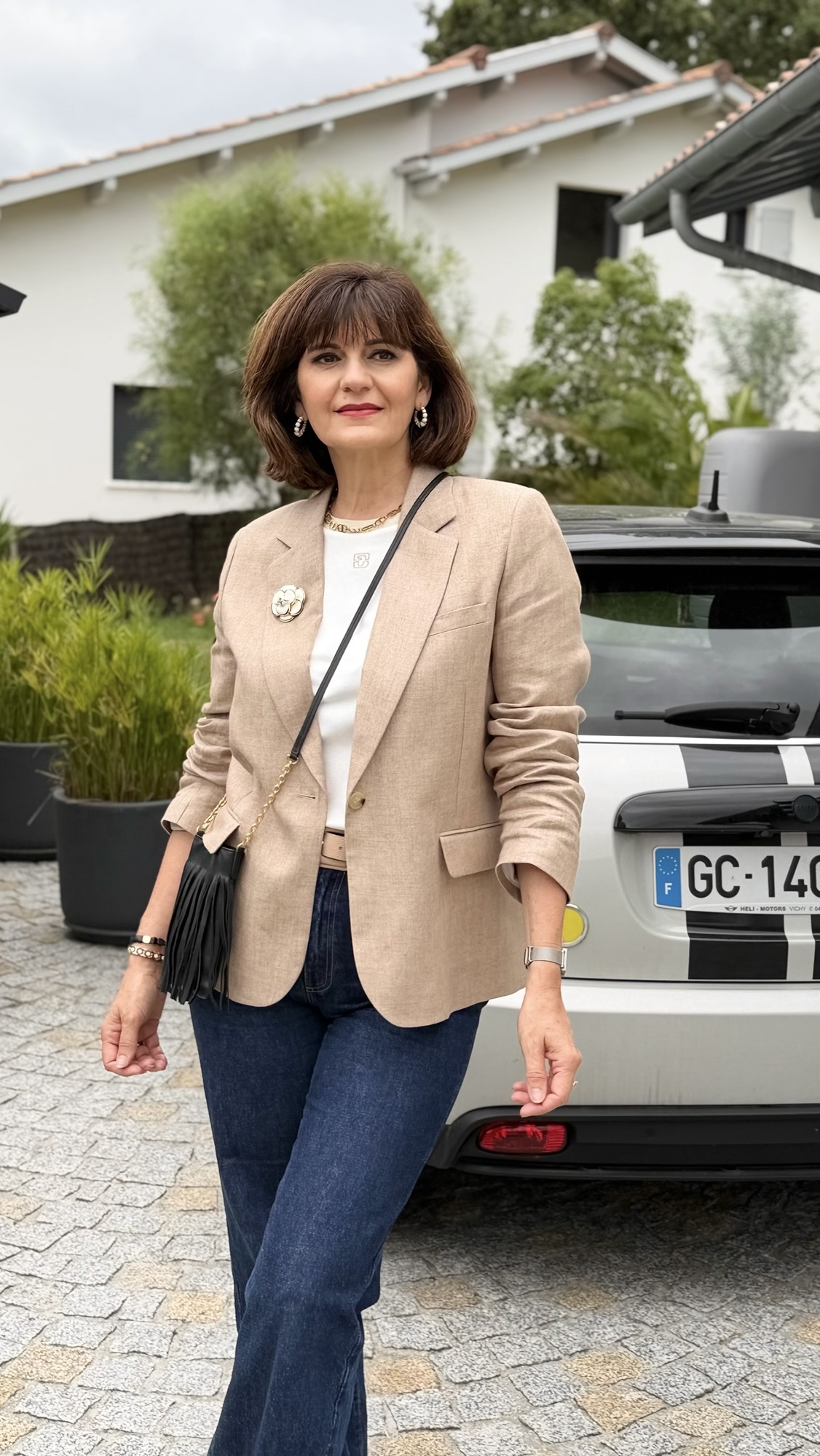
It could be color. A restrained navy outfit becomes much more interesting with burgundy or red. It could be a vintage brooch on a minimalist jacket, one of my favorite ways to give a navy blazer a more modern feel, a silk scarf threaded through belt loops, an elegant evening bag carried during the day, or a masculine detail introduced into a feminine outfit.
The important word is one. When several statement elements compete for attention, an outfit can quickly look overworked. One deliberate disruption gives it personality while allowing everything else to remain understated.
This idea is particularly relevant to Fall 2026 because the season is full of contrasts. Tailoring has become less corporate, romantic details are appearing beside stronger silhouettes, and polished clothes are being styled in increasingly relaxed ways.
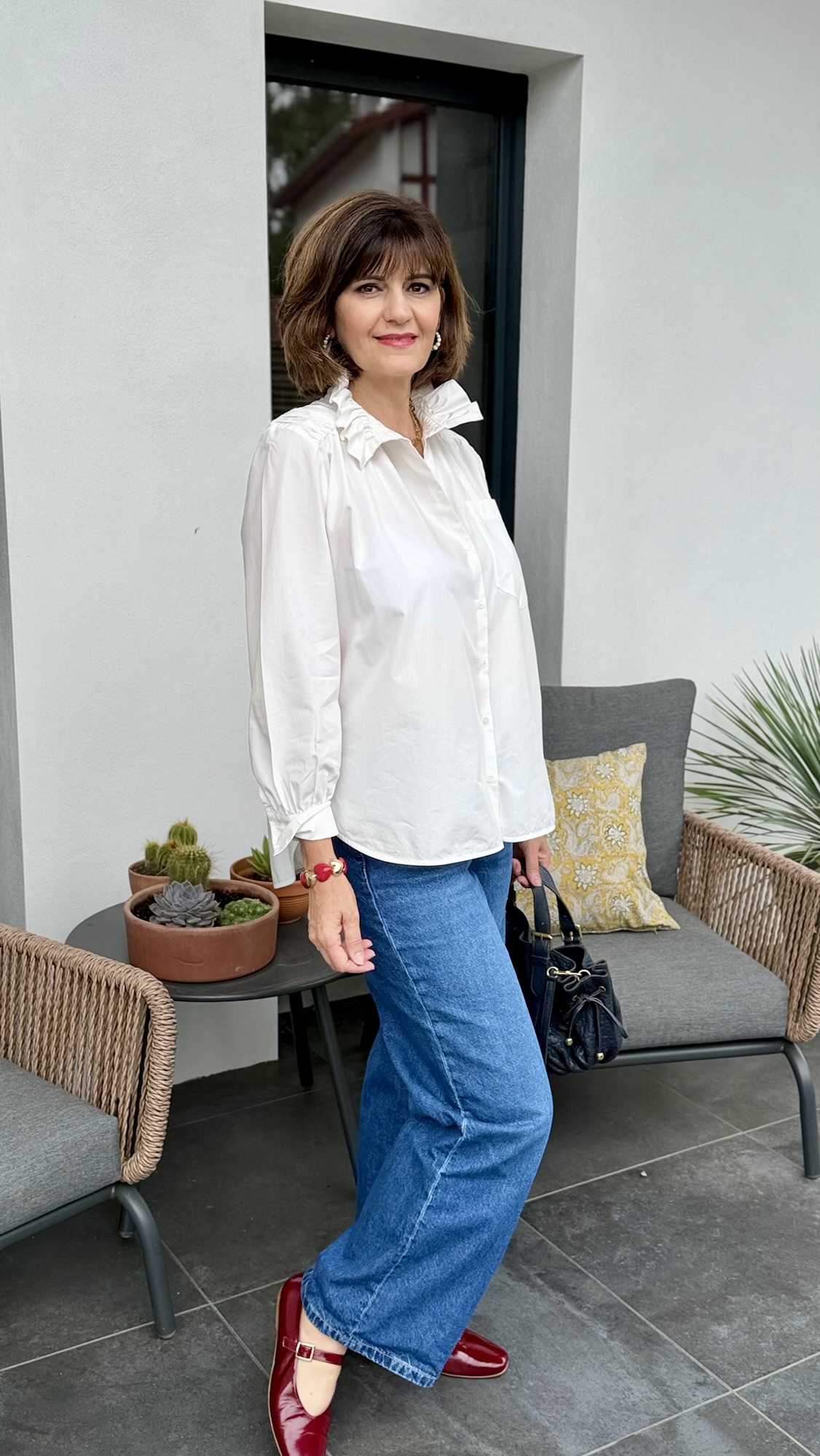
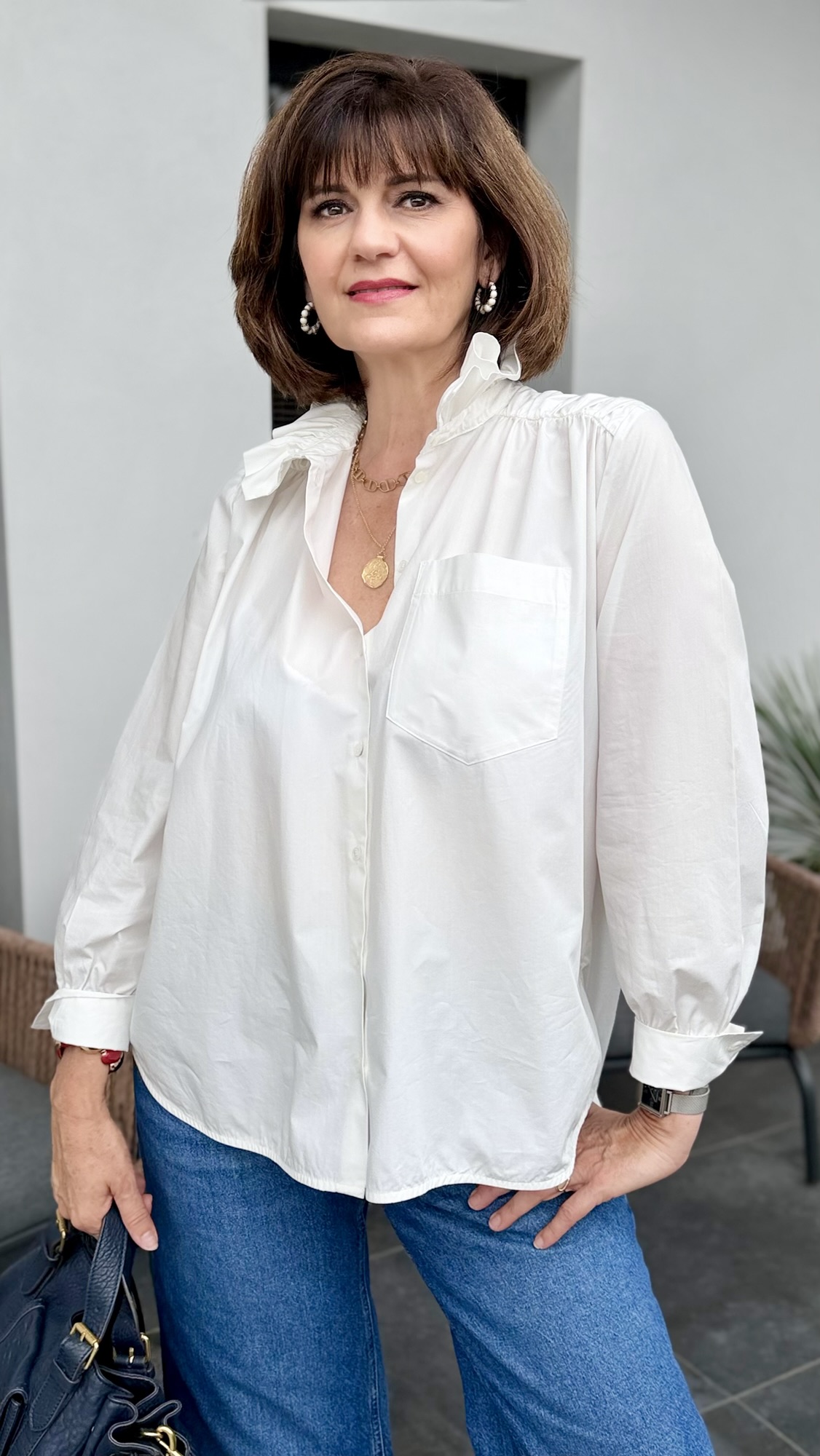
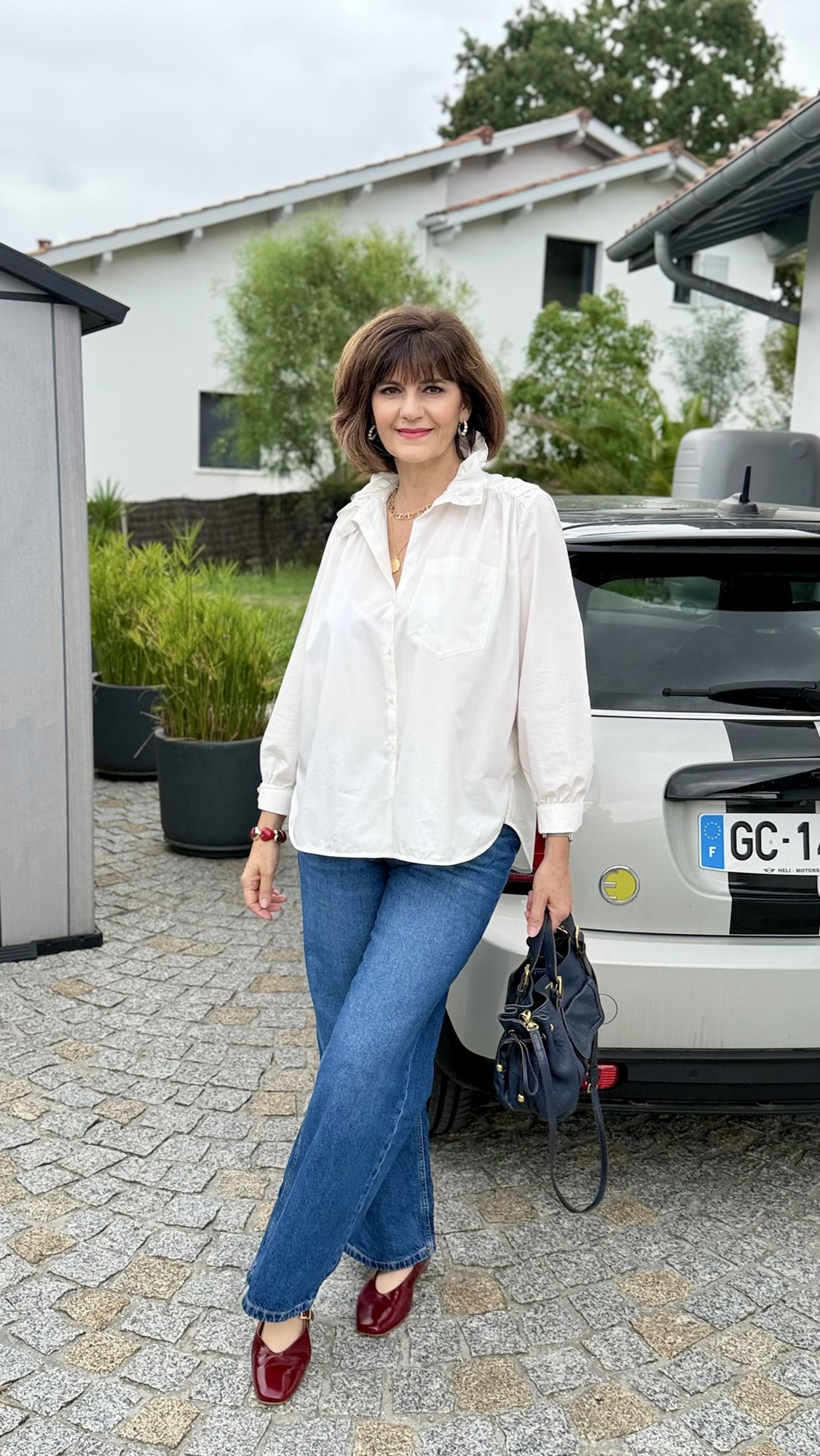
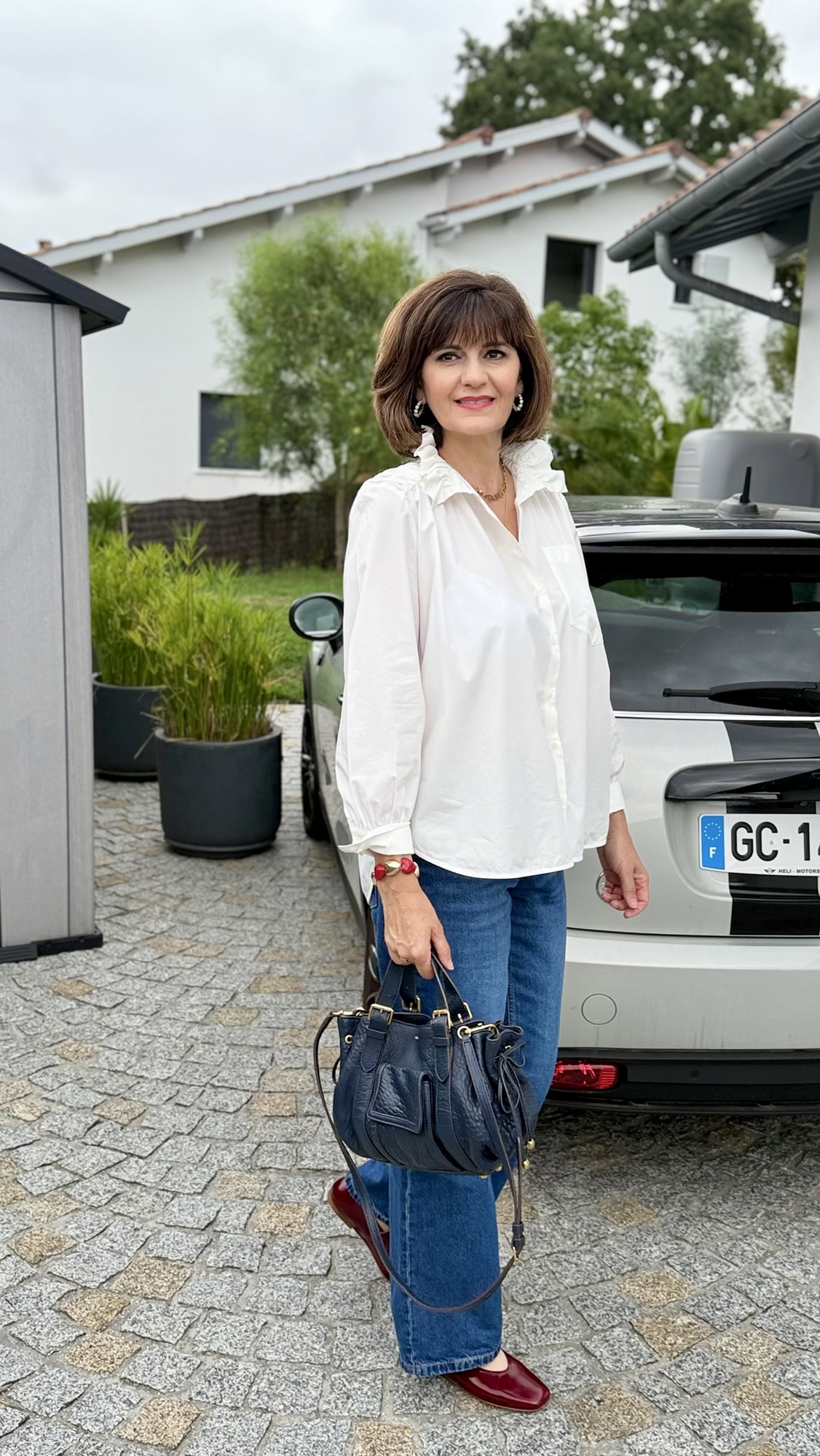
I recently added Balzac Paris’s Léonor shirt to my wardrobe, a very feminine style with a distinctive Victorian-inspired collar. Rather than leaning further into its romantic side, I prefer to create contrast: I wear it with wide-leg jeans and red patent Mary Janes. The denim makes the shirt feel more relaxed, while the red shoes bring a sharper, more contemporary note. It is a good example of how one strong contrast can completely change the personality of a piece.
For women who love timeless wardrobes, this is good news. We don’t have to abandon classic clothes to stay modern, we simply need to resist the temptation to make every element of an outfit tell exactly the same story.
4/ Update Your Color Combinations Before Buying New Colors
Every season brings a new color conversation, and it is easy to assume that participating requires buying a sweater, jacket or coat in the latest shade. Before doing that, experiment with the colors already hanging in your wardrobe.
Navy, for example, doesn’t have to live permanently with white, beige and camel. Try it with burgundy or chocolate brown for greater depth, pale blue for softness or deep green for something less expected.
Gray gains warmth beside cognac and energy with red, while chocolate works beautifully with cream, denim, soft blue and pink. Khaki is also worth treating as a neutral rather than a statement color and can sit comfortably beside ecru, navy, camel and gold.
Another useful technique is tonal dressing. Instead of trying to match colors exactly, combine neighboring shades: cream with oatmeal and camel, chocolate with cognac, or charcoal with softer gray. The subtle differences create depth while keeping the overall effect calm.
Fall 2026 also provides an excellent excuse to reconsider red. Rather than thinking only in terms of a red sweater or coat, a glimpse of color beneath another layer, a scarf, a belt or another small accent can have just as much impact.
Before buying a new color, therefore, check whether you already own it somewhere else in your wardrobe. Sometimes changing the relationship between existing colors is enough to make everything feel different.
5/ Stop Saving Your Best Clothes for the “Right” Occasion
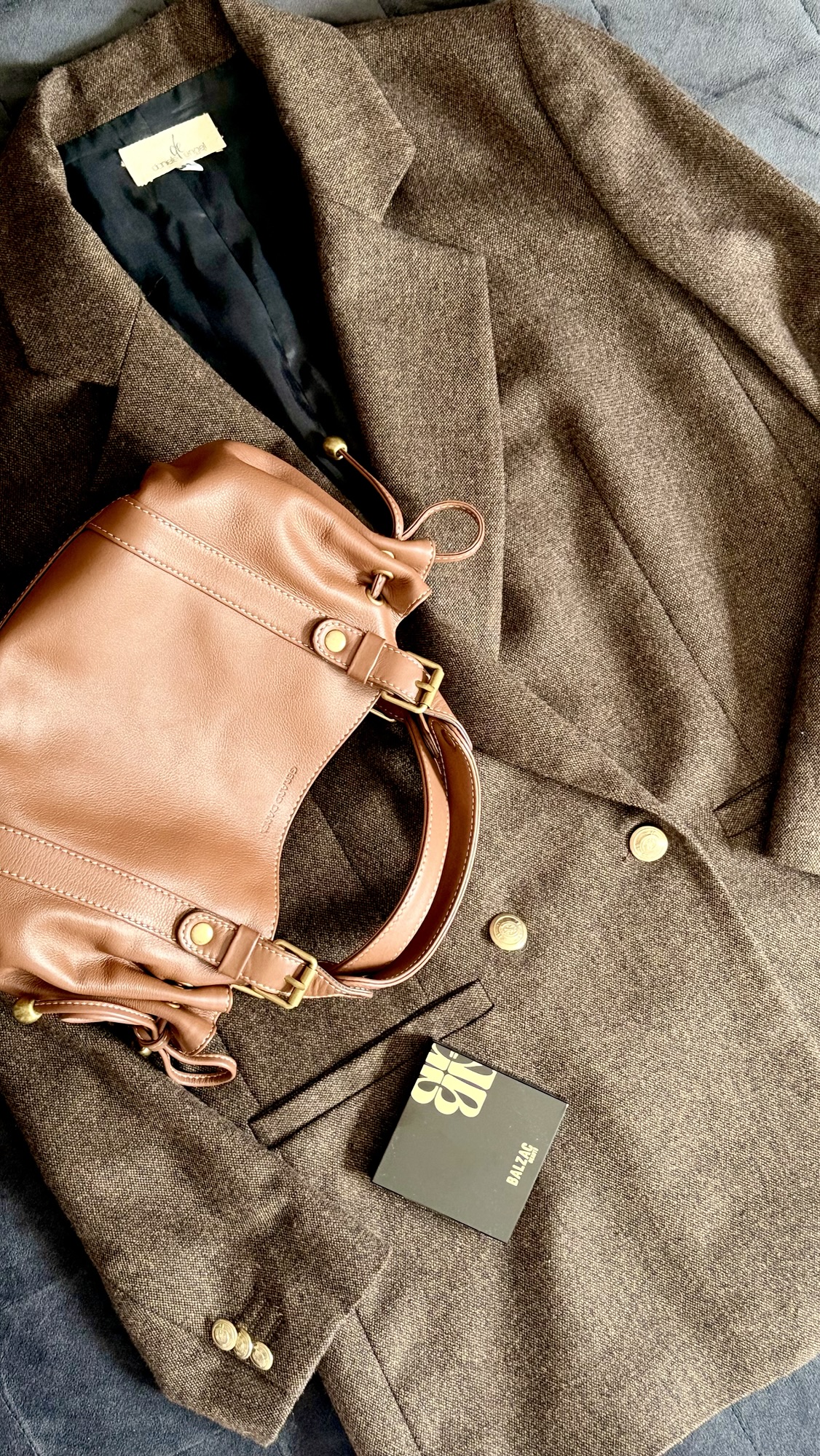
Most wardrobes contain beautiful pieces that spend far too much time unworn because we have mentally assigned them to a particular occasion. Velvet becomes evening wear, tailored pants belong to work, a silk blouse waits for dinner, while a sophisticated little handbag lives in its dust bag until an invitation arrives.
Removing those labels can considerably expand a wardrobe without adding a single garment.
A velvet jacket becomes much more interesting during the day when everything around it is relaxed. Tailored pants lose their corporate character beside a softer knit. A precious blouse can appear underneath something more substantial, while an elegant bag can provide exactly the right contrast to an otherwise understated daytime outfit.
This works particularly well now because Fall 2026 has brought richer, more decorative fabrics back into the conversation. Velvet, embellishment, lace and glamorous details don’t necessarily need to be saved for evening; the modern approach is often to place them somewhere less expected.
Before shopping this fall, identify two or three clothes you rarely wear because you are waiting for the appropriate occasion. Then remove the occasion from the equation and build an ordinary daytime outfit around each one.
You may discover that your wardrobe already contains some of its most interesting fall pieces.
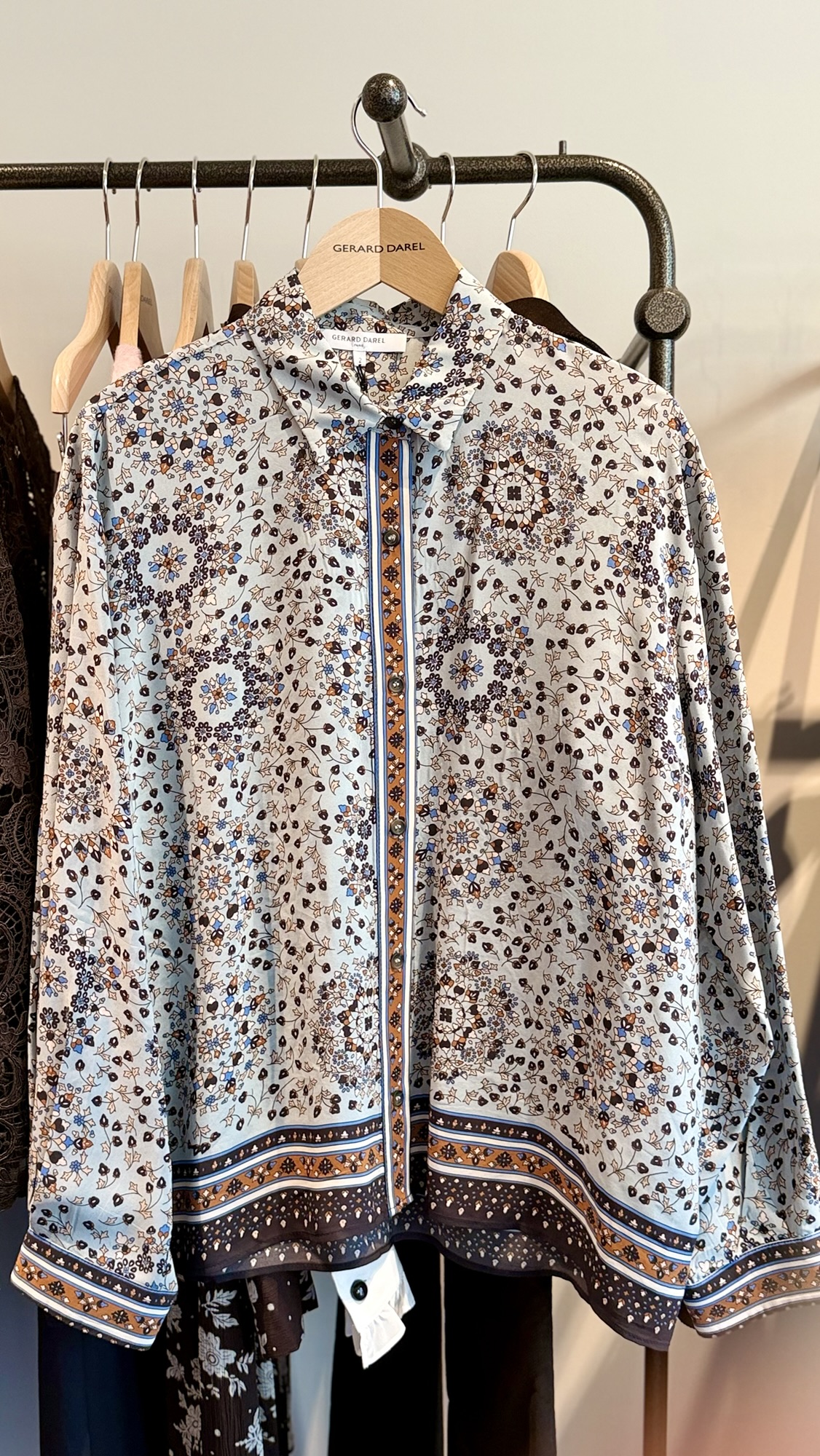
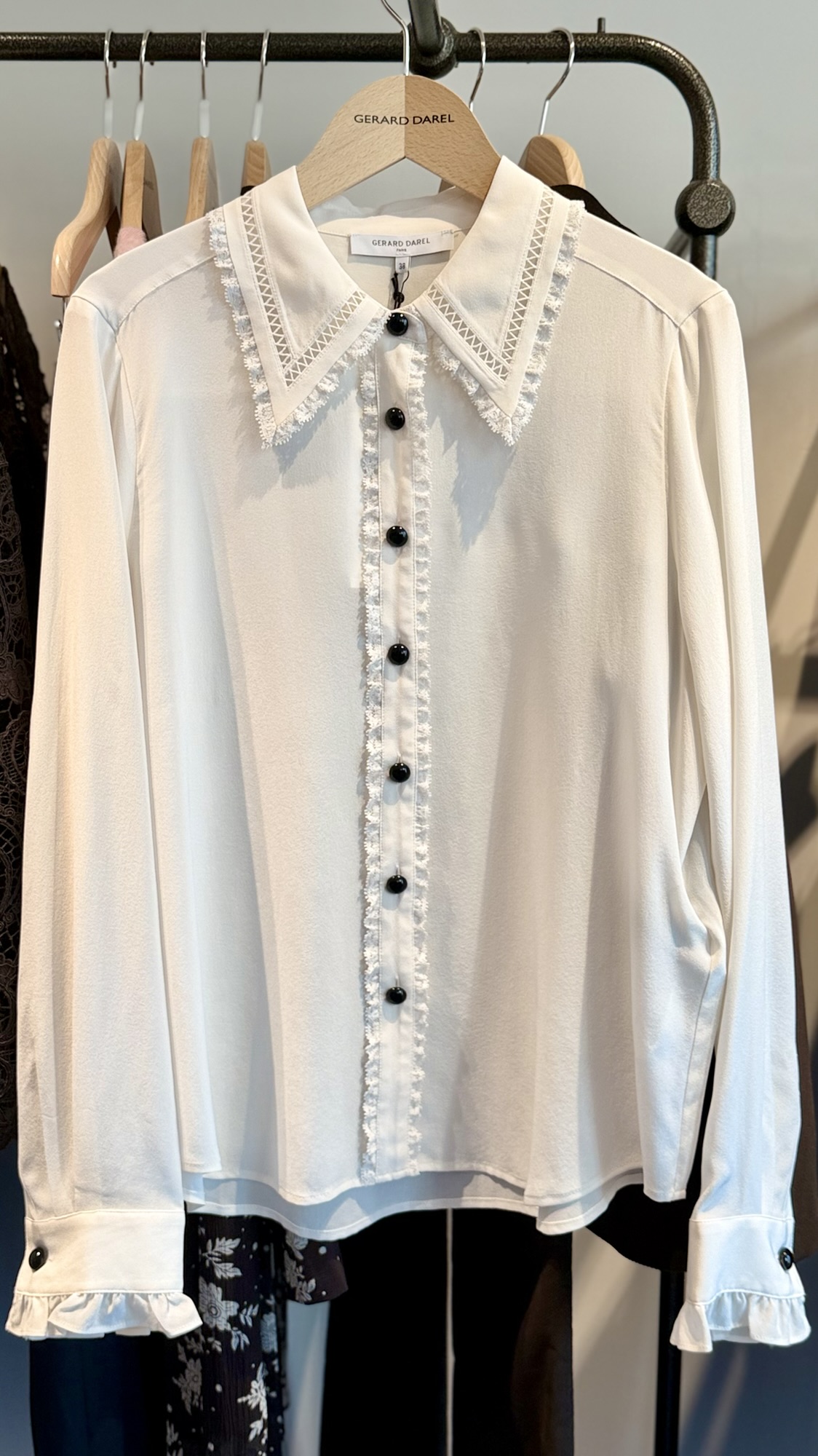
Gérard Darel flowy shirt – Gérard Darel silk shirt
6/ Bring Back Your Silk Scarves, but Forget the Old Rules
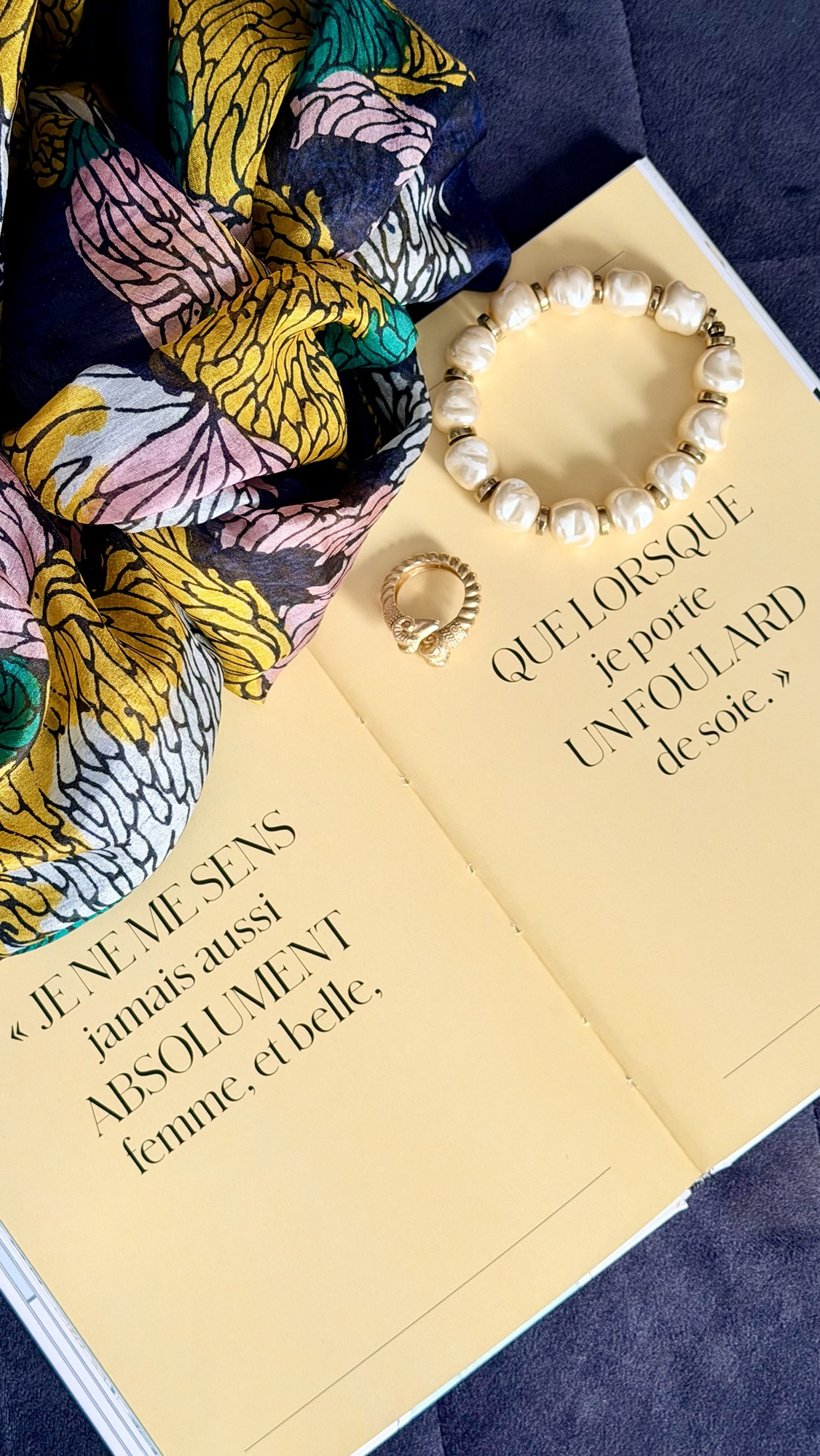
The silk scarf is a perfect example of an accessory that can appear timeless or overly conventional depending entirely on how it is worn. In France, the carré de soie has never really disappeared, but there is no reason to restrict it to a neat knot around the neck.
Fall 2026 gives us plenty of reasons to experiment. Scarves have been knotted, layered, draped, worn around the shoulders and treated almost as part of the garment itself. That opens up much more interesting possibilities for the beautiful squares many of us already own.
How to update your fall wardrobe
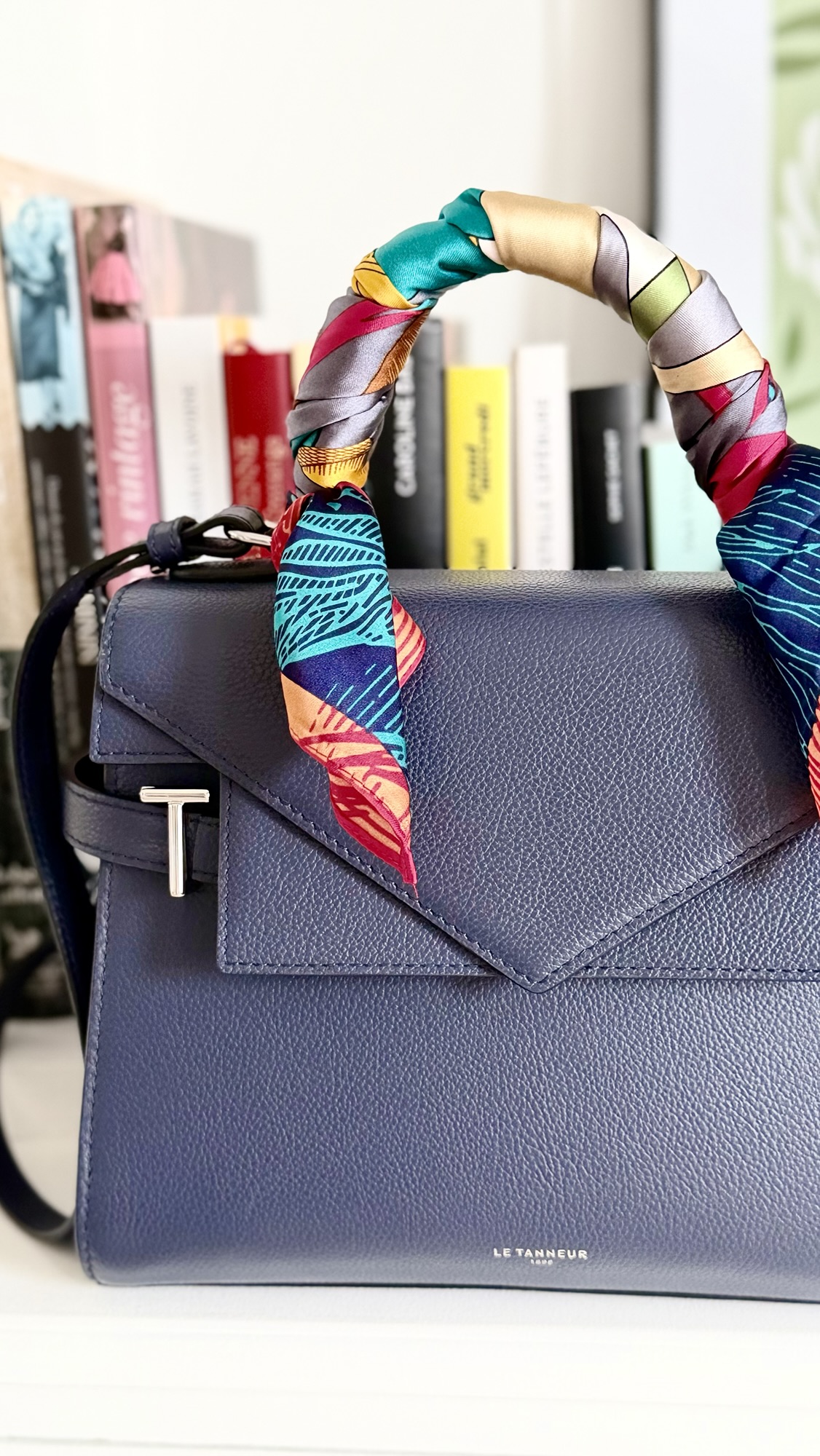
Fold one narrowly and wear it almost like a tie, thread it through belt loops, knot it asymmetrically at the neck or allow a larger square to fall over the shoulders. A small scarf can introduce print on the handle of a handbag, while a brooch can be used to hold a larger one in place.
This is also one of the easiest ways to experiment with print and color when the majority of your clothes are neutral. Florals, geometric designs, equestrian prints or vintage patterns can introduce colors you might never choose for an entire garment.
And don’t feel that the scarf needs to match perfectly. In fact, the slightly unexpected shade is often what prevents the result from looking too coordinated.
If you have inherited beautiful scarves from your mother or grandmother, wear them. Fashion becomes much more interesting when everything we put on doesn’t come from the same season.
How to update your fall wardrobe
7/ Use Jewelry to Change the Clothes Themselves
Jewelry is usually treated as the finishing touch: we complete an outfit and then decide what to add. A more interesting approach is to consider jewelry earlier because its scale, shape and placement can influence the clothes themselves.
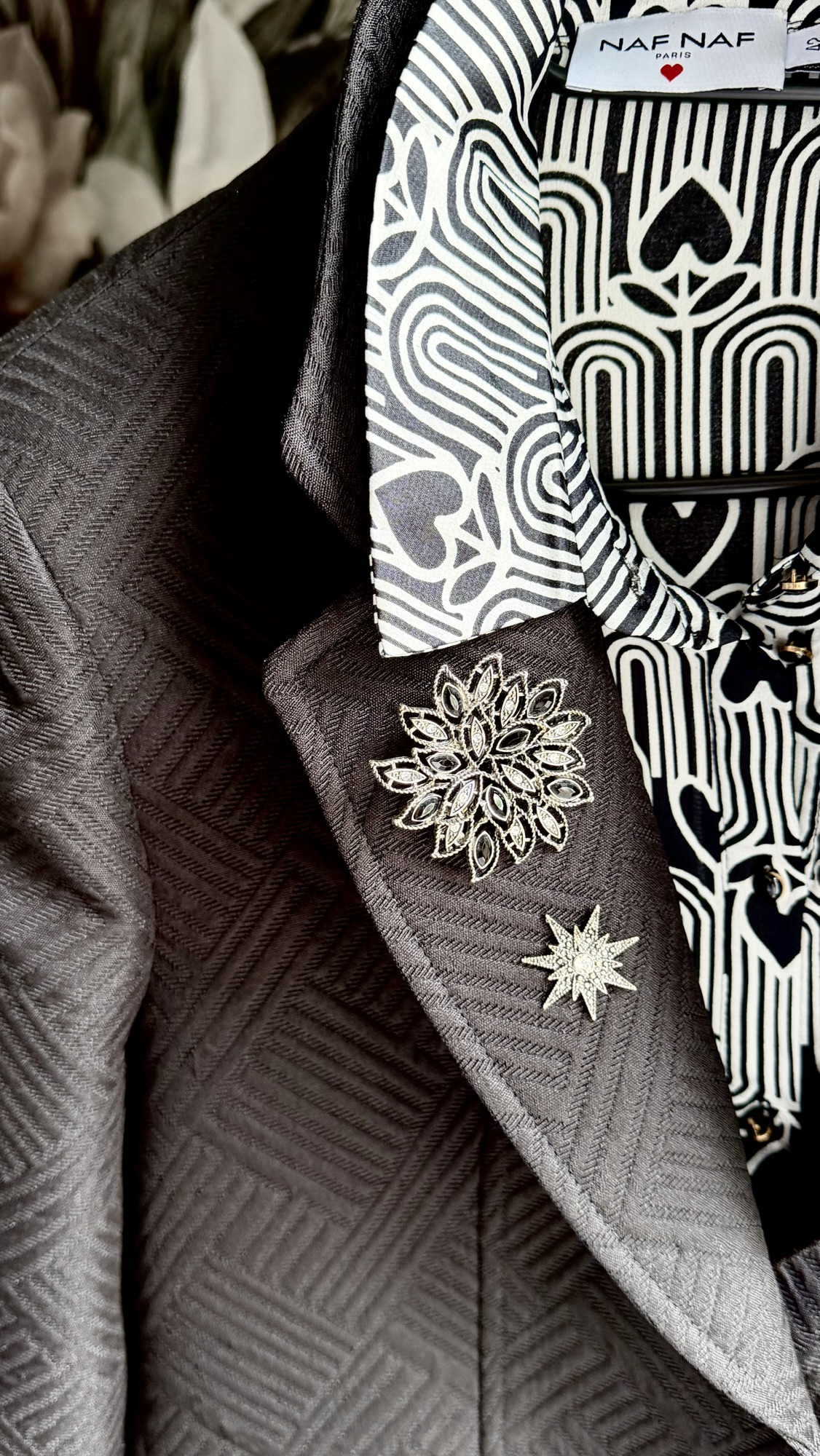
Fall 2026 jewelry makes this especially easy. Bold gold jewelry, statement pearls and vintage-inspired brooches have all appeared prominently, giving simple clothes much more personality without requiring complicated styling.
A substantial cuff can bring strength to a fine knit, while a longer necklace introduces a vertical line that changes the way a simple top is perceived. Pearls become less conventional when their scale changes or when they appear against clothes that aren’t traditionally ladylike.
Brooches are even more versatile because they can alter the garment itself. Instead of automatically pinning one to the traditional lapel, try the neckline of a shirt, the shoulder of a knit, a pocket, a scarf or even an unexpected position on a jacket. Several smaller brooches can also work together if the rest of the outfit remains restrained.
Before buying new jewelry, look through what you already own. Pieces inherited from previous generations don’t need to be disguised as modern jewelry. Their age is precisely what gives them character; the modernity comes from the clothes you choose to wear around them.
How to update your fall wardrobe
8/ When an Outfit Feels Flat, Think Texture Before Accessories
When an outfit seems boring, our first instinct is often to add another accessory or introduce a brighter color. Sometimes the more sophisticated solution is texture.
Fall is particularly good for this because wool, cashmere, tweed, velvet, corduroy, bouclé, suede, dense denim and textured leather all react differently to light. Even when the palette is restrained, those contrasts give the eye something to discover.
Imagine an outfit based almost entirely around brown. In similar smooth fabrics, it may look quite flat. Combine chocolate wool with soft cashmere, dense denim and cognac grained leather and the result becomes much richer without introducing a single additional color.
The same principle works beautifully with navy, gray, cream and black, and it is particularly useful if you prefer timeless clothes to bold prints.
It also allows us to reconsider fabrics that have sometimes been labelled too traditional. Tweed doesn’t have to look conservative, velvet doesn’t belong exclusively to evening, and croc-effect leather doesn’t need a formal setting. Their modernity depends largely on what surrounds them.
So when an outfit feels unfinished, don’t automatically add something. Sometimes the better solution is to replace one smooth surface with a more interesting one.
How to update your fall wardrobe
9/ Pay Attention to the Small Details That Date an Outfit
Sometimes it isn’t the garment that looks dated but a seemingly insignificant detail. Buttons are an excellent example. An otherwise attractive cardigan or jacket can be let down by very ordinary plastic buttons, while replacing them with metal, mother-of-pearl, horn-effect or vintage versions can give the entire piece more character.
Belts deserve the same attention. A jacket or dress originally sold with a matching fabric belt may look much more interesting with leather. A shirt you always wear loose may suddenly become more flattering when tucked in differently, while an oversized shirt can sometimes work better as a light outer layer than in its original role.
Then there is condition. It is important to distinguish between old and worn-out. Age can give a garment character; neglect rarely does. Pilled knitwear, stretched necklines, damaged heels, loose buttons and tired leather can undermine an outfit regardless of how fashionable its individual pieces are.
Before buying replacements, repair what deserves to stay. A fabric shaver, a cobbler, proper leather care and a few intelligent alterations can make an astonishing difference. Taking care of these seemingly minor details is also one of the simplest ways to look more polished every day.
10/ If You Buy Something New, Make Sure It Unlocks Your Existing Wardrobe
Updating a wardrobe doesn’t mean refusing to shop. I still love discovering new collections, and a carefully chosen new piece can be exactly what makes older clothes exciting again.
The question I find most useful isn’t simply Do I love this? but What will this allow me to wear differently?
Imagine finding something you love in a new collection. Before buying it, forget how it was styled in the store and mentally take it home. Can you immediately imagine it with several things you already own? Could it work with different layers? Can you dress it up and down? Does it introduce a proportion, texture or color that is genuinely missing from your wardrobe?
If the answer is yes, the purchase isn’t creating one new outfit. It may be creating ten.

The same reasoning is particularly effective with accessories. A burgundy bag, for instance, may establish new connections between navy, gray, camel, cream, denim and chocolate already in your closet. A distinctive belt may change several silhouettes, while a silk scarf can introduce colors you had never thought of combining.
And if you already own something very similar, demand more from the new version. It should offer a genuinely better fit, a different proportion, exceptional material, superior craftsmanship or a detail that creates styling possibilities you don’t currently have.
Otherwise, however beautiful it may be, it probably isn’t updating your wardrobe. It is simply adding to it.
How Do You Keep Your Fall Wardrobe Modern Without Losing Your Personal Style?
A wardrobe becomes more interesting when it starts to reflect the way we actually live, rather than the way we think we are supposed to dress. Fall is a good moment to notice what still feels right, what deserves a second chance, and what no longer has a place.
The most stylish women are the ones who know how to create something personal from what they have, and who are confident enough to ignore what doesn’t suit them.
That is the direction I want to take this fall: fewer automatic choices, more curiosity, and a wardrobe that feels considered without ever looking overthought.
What about you? Which pieces in your wardrobe are you ready to see differently this fall?