A trench coat is one of the pieces I wear most once fall arrives. It gives just enough protection when temperatures begin to drop, works on those unpredictable in-between days, and can make even the simplest outfit look more polished.
I also love its unmistakably British character. Yet although the trench coat was born in Britain, French women have embraced it so completely that it has become one of the staples of a French wardrobe, alongside straight-leg jeans, a white shirt, a navy blazer, loafers, and a beautiful leather handbag.
That says a lot about the way French women tend to approach classic clothes. A trench does not need to be saved for rainy days or dressed in a particularly formal way. Worn open over jeans and a shirt, with loafers or ballet flats and a good handbag, it fits perfectly into the understated, practical elegance associated with modern Parisian style.
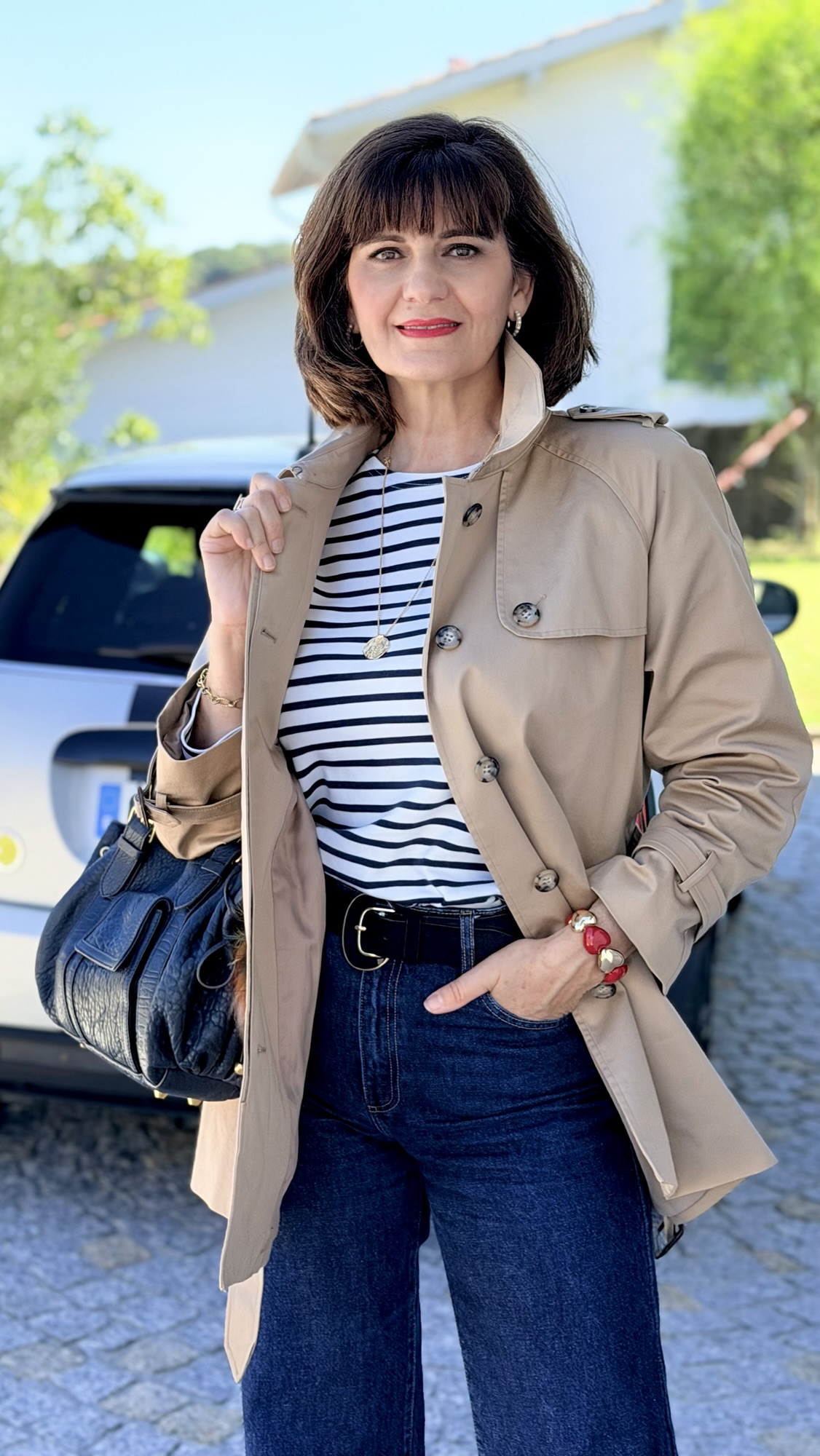
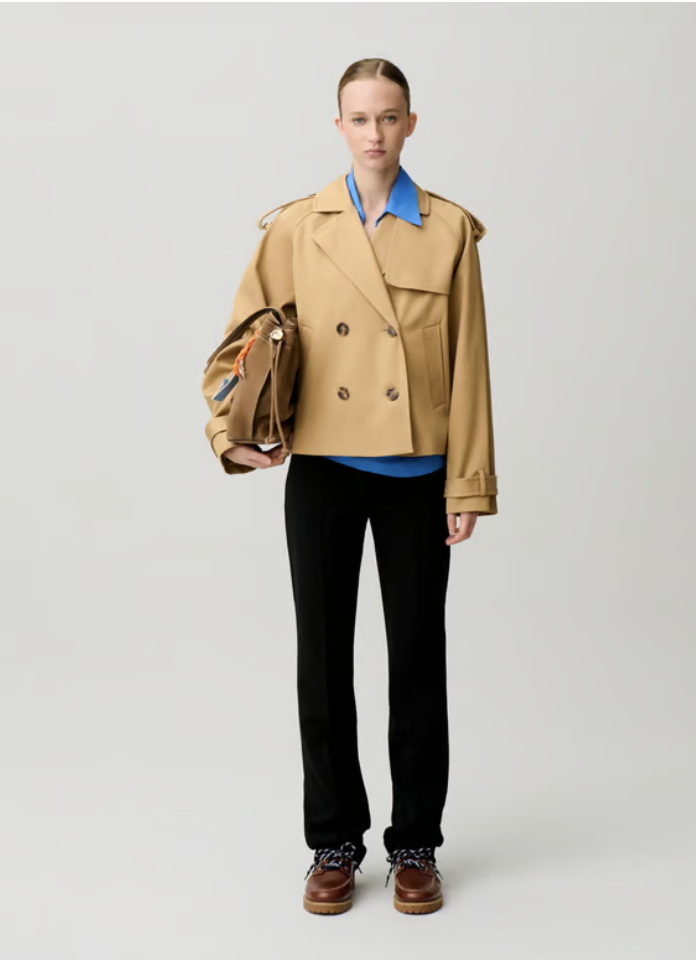
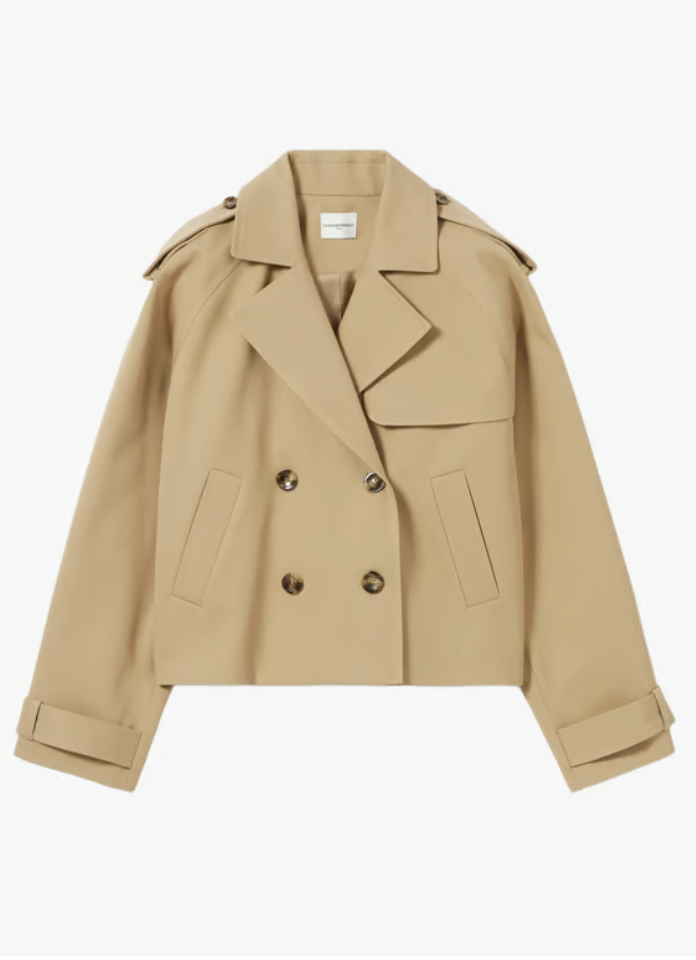
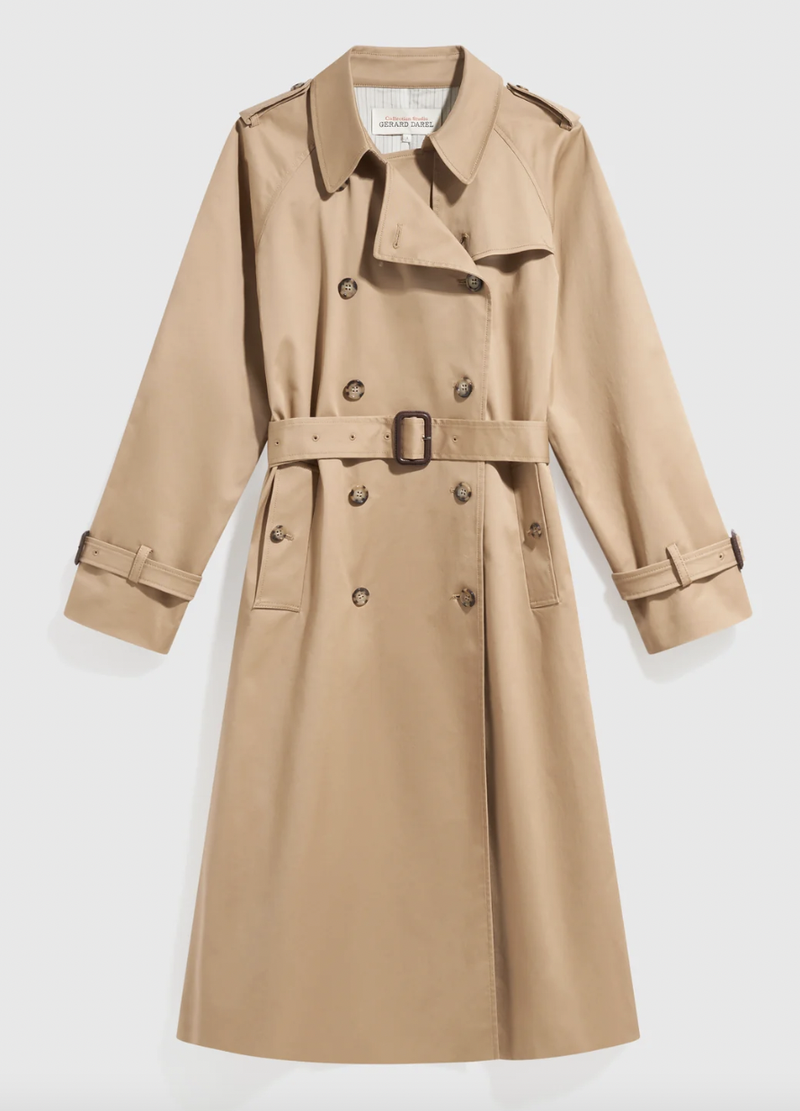
I own three trench coats collected over the years, in different lengths. This fall, I recently fell for the Vania trench coat by Gérard Darel. It is described by the brand as a short trench, but it falls well below the hips, making it much more covering than the cropped styles we are seeing now.
Comparing these different coats made me realize how much a few inches can change the balance of an outfit. A trench that stops at the waist or hips does not create the same silhouette as one that reaches the upper thigh, the knee, or the ankle.
So rather than asking whether a trench coat is fashionable, it is one of those pieces that never really disappears, I think the more useful question is: which trench coat length works best for your body, your wardrobe, and the way you actually live?
➡️ Gérard DAREL
Why Is the Trench Coat Such a French Style Essential?
The trench coat may be British in origin, but French women have made it their own for decades. What makes it so appealing is precisely that mix of elegance and slightly masculine structure: the sharp collar, the belted waist, the shoulder details, and the clean line of the coat give an outfit instant presence without making it feel overly dressed.
That is also why it works so well in a French wardrobe. A trench can be thrown over something very casual, such as jeans and a knit, but it looks just as convincing with tailored trousers, a dress, or a more polished outfit.
It has enough character to elevate simple clothes, yet it never feels out of place with more refined pieces.
I also think this is one of the reasons French women continue to wear it season after season. It is not tied to one specific dress code. Depending on how you style it, the same trench can look relaxed, sophisticated, slightly boyish, or very feminine. This versatility is also very much part of French style after 50: rather than chasing every trend, I prefer to update classic pieces through proportions, accessories, and the way I wear them.
And of course, it does not need to be raining. On a dry fall day, I wear a trench for exactly the same reason I would choose a blazer or a beautiful wool coat: because it gives the silhouette more structure and makes even a simple outfit feel more intentional.
What Are the Main Trench Coat Lengths?
Before looking at today’s shorter and longer versions, it is worth going back to the proportions of the original. The trench coat is an iconic wardrobe piece, and its most timeless silhouette traditionally falls just below the knee. This length gives the coat its characteristic elegance while offering enough coverage without restricting movement.
Designers have since played freely with those proportions, which is why the terms used by brands can sometimes be confusing. A trench described as “short” may cover the hips and upper thighs, while another may stop much higher and look closer to a jacket.
Rather than relying only on the product description, I recommend looking carefully at where the hem actually falls on the model and checking the garment length in inches or centimeters whenever it is provided.
From there, we can distinguish four main trench coat lengths, each creating a very different effect on the silhouette.
The Short or Cropped Trench Coat
This is the version that moves furthest away from the traditional trench coat silhouette. There is no universal measurement that defines a cropped trench. Depending on the design and the height of the woman wearing it, it may finish at the waist, the upper hip, or slightly below the hips.
Its appeal is easy to understand. A shorter trench gives a familiar classic a sharper, more contemporary proportion, especially when worn with high-waisted jeans or wide-leg pants. Because more of the lower half remains visible, the legs can appear longer and the outfit feels lighter.
It can also be a useful way to update your fall wardrobe without replacing everything you own. Changing the proportion of just one familiar piece can make jeans and trousers you have worn for years suddenly feel different.
That does not mean cropped trench coats are reserved for younger women. They do, however, create a visually younger, more fashion-focused silhouette, and they may be less appealing if what you want after 50 or 60 is something more covering and practical.
This is also their main limitation: a cropped trench retains many of the recognizable details of the original, collar, storm flaps, shoulder tabs, perhaps a belt, but offers much less protection around the hips and thighs.
I have not added one to my closet yet for that very reason. I like the look, but I still want my trench coat to serve a practical purpose as well as a stylistic one.
The Mid-Length or Three-Quarter Trench Coat
A mid-length trench is a particularly good option if a cropped style feels too short but a traditional knee-length or long trench seems more than you need. It usually covers the hips and part of the upper thigh, offering enough coverage to feel like a real coat while remaining light and practical for everyday wear. It is also a comfortable length for driving, walking around town, or simply moving through a busy day.
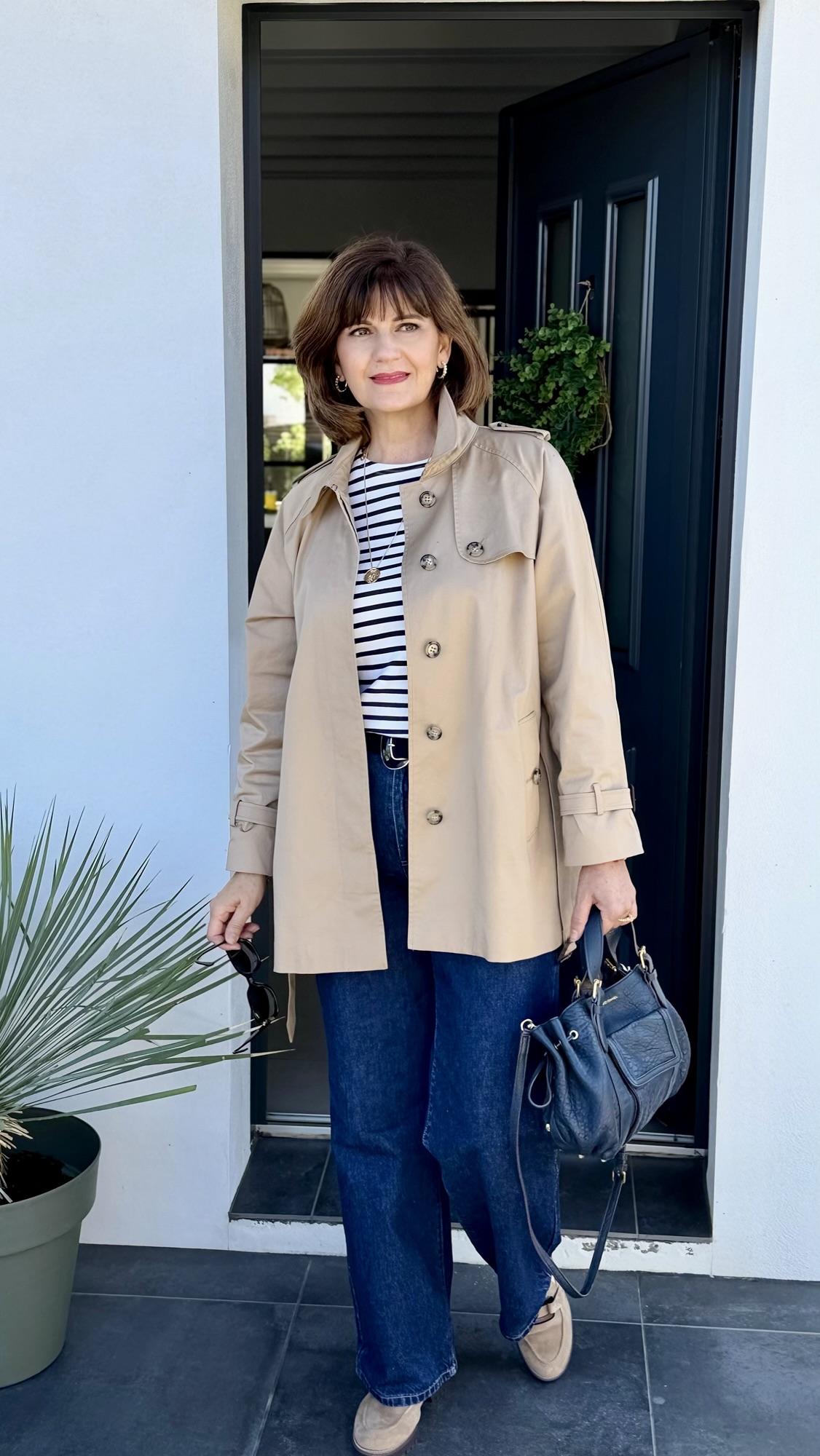
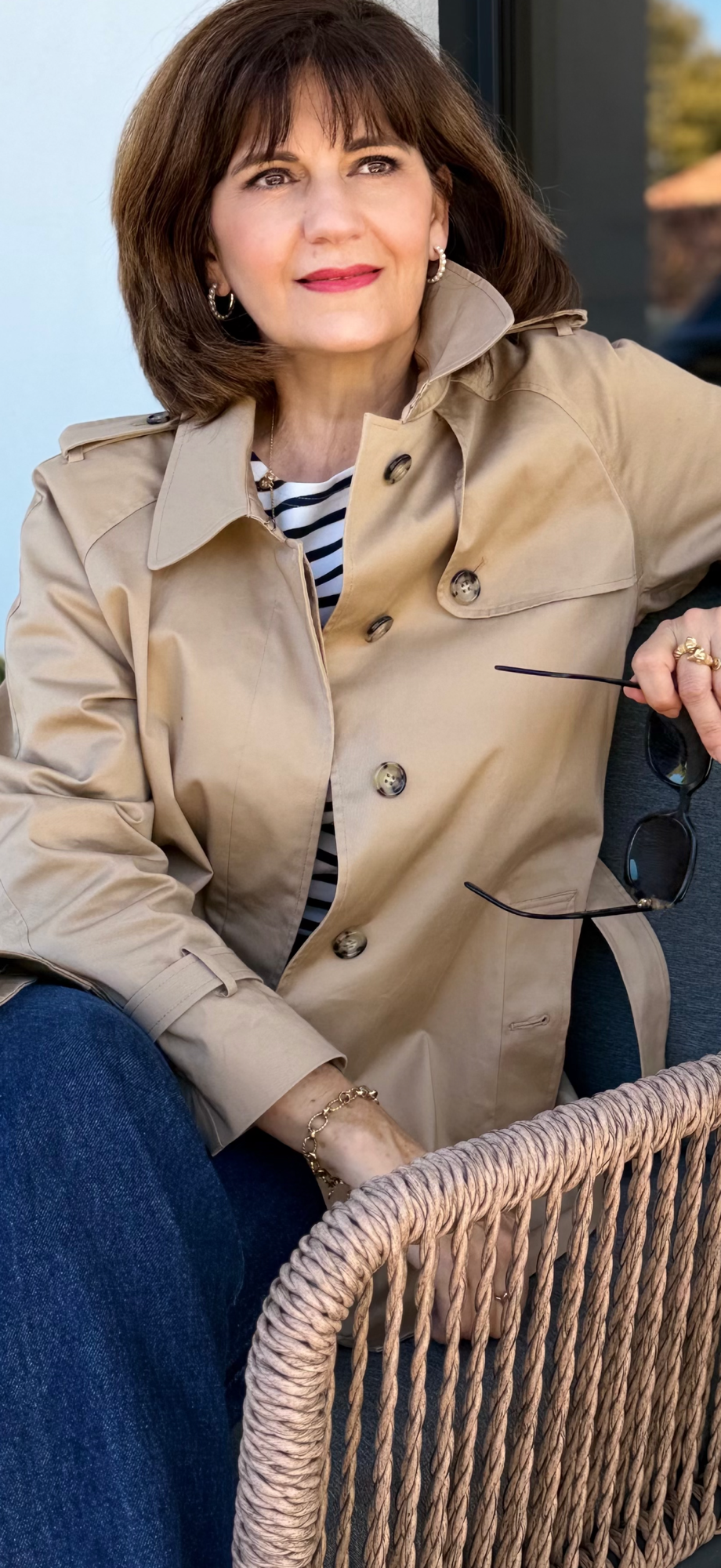
This is the length I chose this season with my Vania trench coat by Gérard Darel. Although the brand describes it as a short trench, I see it as more of an in-between style: it falls well below the hips and covers the upper thigh, placing it somewhere between today’s true cropped trenches and the traditional trench that reaches the knee.
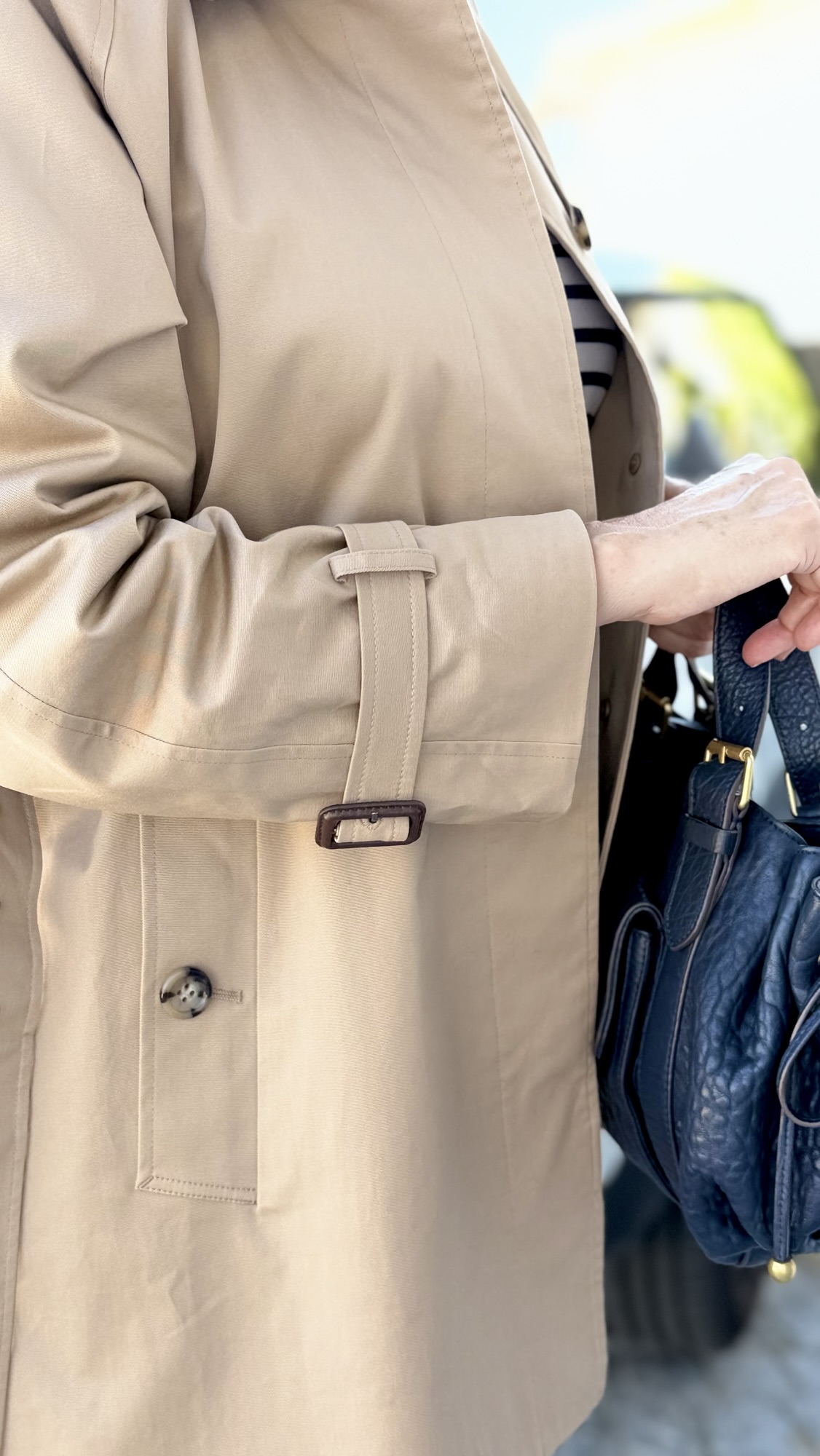
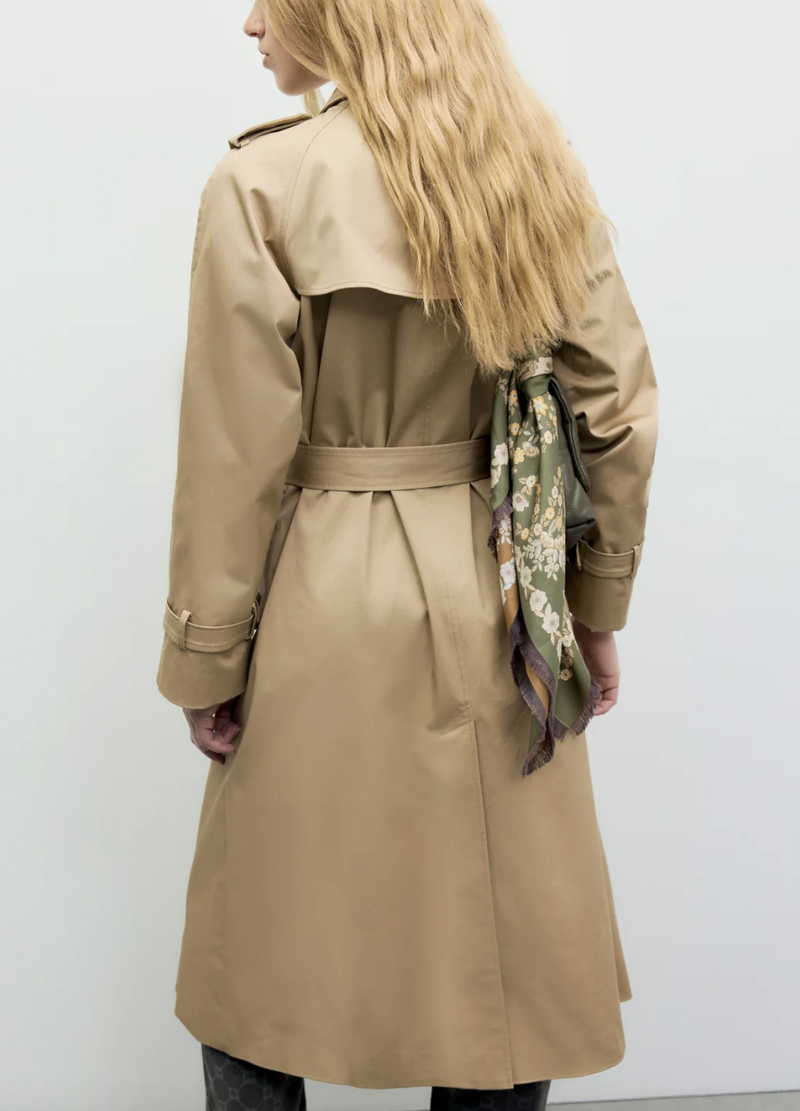
The Vania has all the details I personally love in a trench: a straight silhouette that can be belted at the waist, shoulder tabs, a back storm flap, belted cuffs, raglan sleeves, and a classic shirt collar. These traditional elements give it that slightly masculine British character I find so elegant, while the shorter proportion keeps the overall look modern and easy to wear.
It is made from 98% cotton and 2% elastane, so the fabric has enough structure to hold its shape while offering a little flexibility. What convinced me most, however, was the length. It covers the hips and upper thighs without adding heaviness to the silhouette and feels much less cumbersome than a long trench.
In these photos, I am wearing it with dark-wash jeans and a Breton striped top, two pieces that are very much part of my everyday style. The deep indigo denim gives the outfit a slightly dressier feel than a faded jean, while the striped top brings in that familiar French touch without making the look feel overly styled.
A denim shirt is another option I particularly like with a beige trench, especially in fall. I shared more ideas in my guide on how to style a denim shirt for women.
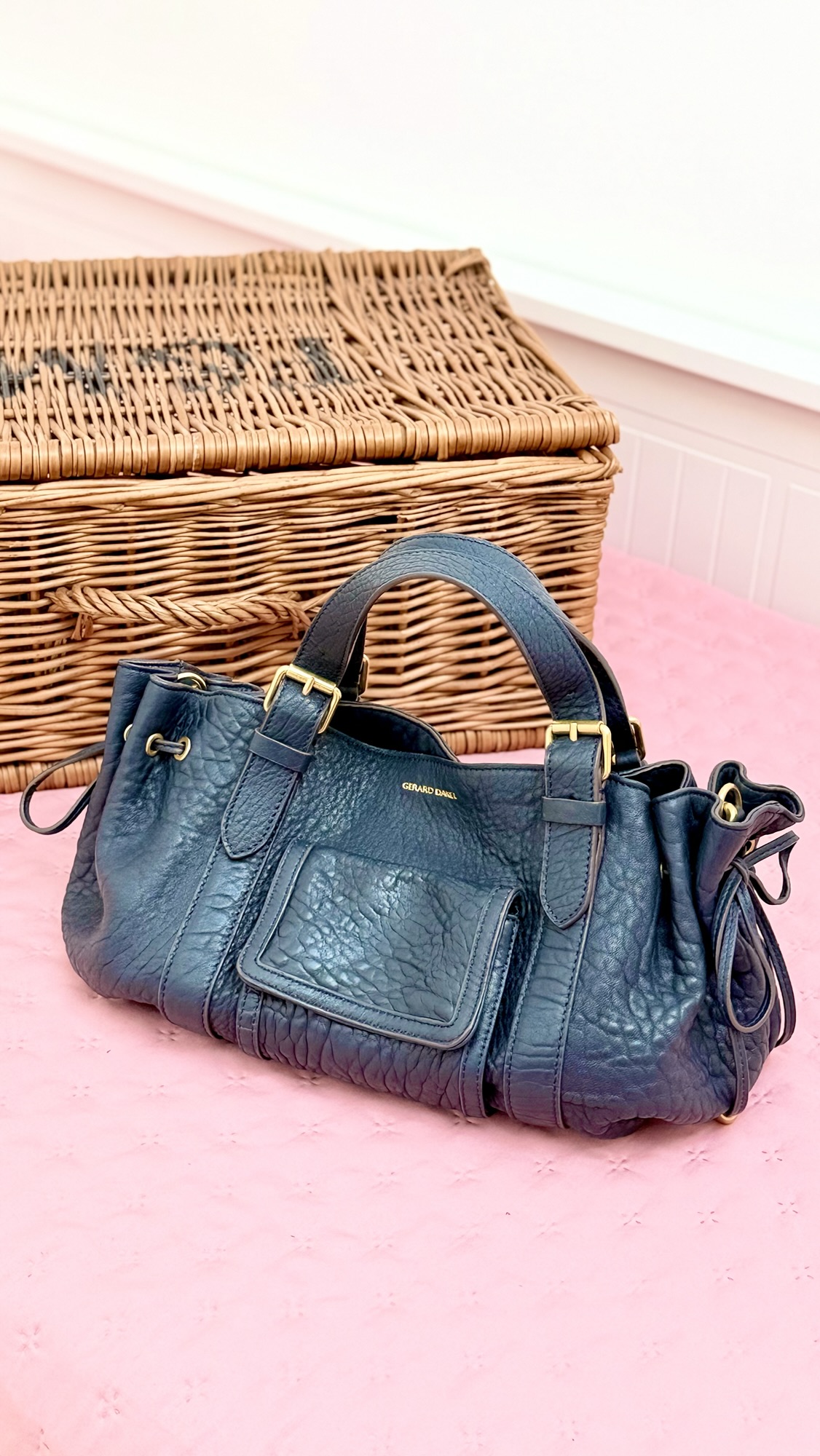
I am also carrying my 18H Bubble leather bag by Gérard Darel, which has gradually become my favorite bag. Its beautifully supple leather gives it a relaxed elegance, and I find its proportions particularly well suited to everyday life: roomy enough to carry what I need without becoming bulky or overwhelming the silhouette.
Together, the dark denim, Breton stripes, beige trench, and soft leather bag create exactly the kind of outfit I enjoy wearing in fall: casual, polished, and unmistakably French, but never too calculated. The Vania gives the whole look structure while remaining comfortable and covering enough for the season, which is why I find this mid-length proportion such a successful compromise between style and practicality.


The Classic Knee-Length Trench Coat
If you are buying your first trench coat and want something you can wear for years, this is probably the length I would look at first.
A classic trench usually falls just above the knee, at the knee, or slightly below it. It offers substantially more coverage than a short jacket without feeling as dramatic or demanding as a long coat.
It is also extremely adaptable. Straight-leg jeans, tailored pants, wide-leg trousers, dresses, and skirts can all work with this length, and it is compatible with everything from loafers and ballet flats to ankle boots.
From a proportion standpoint, a knee-length trench often creates a clean, balanced vertical line. It covers the upper thighs without adding too much fabric around the legs, and because its proportions are rooted in the traditional trench, it tends to withstand changing trends particularly well.
If your priority is buying one coat that will work with as much of your closet as possible, the classic knee-length trench remains very difficult to beat.
The Long Trench Coat
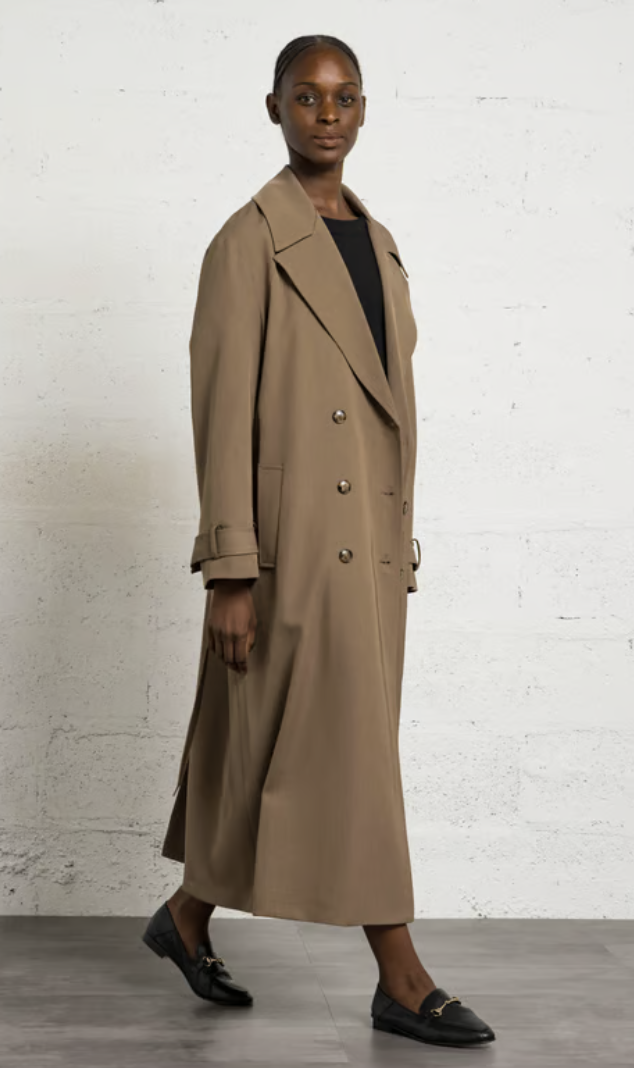
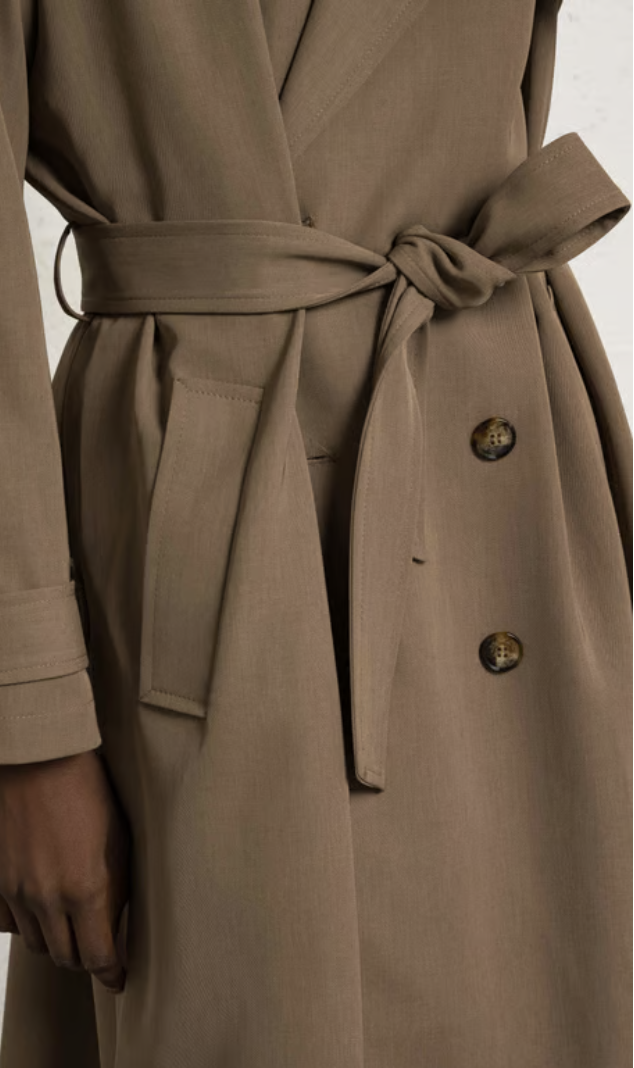
A long trench falls below the knee and may reach mid-calf or even closer to the ankle.
It has the most presence of all the different lengths and can turn an extremely simple outfit into something striking. Worn open, the two sides of the coat create strong vertical lines, which can make the silhouette appear longer and more fluid.
A straight-leg jean, a fine sweater or shirt, and simple flat shoes are often enough. The coat provides the movement and drama.
If you have curves, do not assume a long trench is automatically off limits. In fact, a fluid long coat worn open can create a very flattering vertical line. I would simply avoid fabrics that are extremely stiff or styles with excessive volume through the bust and hips.
The same principle applies if you are petite. Being short does not automatically mean you need a short coat. What matters is the overall volume and where the hem falls. A trench that reaches below the knee or mid-calf can work beautifully, while an extremely oversized ankle-length version may be harder to balance.
The long trench also offers the greatest coverage in windy or damp weather. Its main drawback is practical: if you drive frequently, get in and out of a car all day, or simply dislike dealing with excess fabric, those extra inches can become annoying.
What Trench Coat Length Works Best If You Are Petite?
One of the oldest fashion rules says petite women should avoid long coats. I do not think it is that simple. Length matters, but so do the width of the coat, the position of the belt, the sleeve length, your pants, your shoes, and the amount of volume in the entire outfit.
A mid-length trench ending above the knee is generally an easy choice for a petite frame because it offers coverage while leaving much of the leg visible.
A longer trench can work too, especially worn open over a relatively simple outfit. The vertical lines created by the front of the coat can actually make the body appear longer.
What is more likely to overwhelm a petite frame is the accumulation of volume: an oversized ankle-length trench, bulky sweater, extremely wide pants, exaggerated sleeves, and heavy shoes all worn together.
Rather than eliminating one particular coat length, I would look at the silhouette as a whole.
How Should You Choose a Trench Coat for Your Body Shape?
I prefer to think of body shape as a useful reference rather than a list of rules.
If your hips are wider than your shoulders, pay attention to where the hem ends. A trench that stops precisely at the widest point of the hips naturally draws the eye there. Sometimes moving the hem slightly above or below that point changes the entire result.
If your shoulders are more pronounced, look carefully at traditional trench details. Large storm flaps, shoulder tabs, wide lapels, and double-breasted fronts all add visual structure to the upper body. A cleaner version may feel easier to balance.
With a straighter figure, wearing the trench open emphasizes verticality, while tying the belt loosely can suggest more shape at the waist.
If your waist is naturally defined, you may want to highlight it with the belt, although a straight trench worn open gives the same coat a much more relaxed personality.
For a fuller bust or curvier figure, I would focus above all on the way the coat falls. It should close comfortably without pulling across the buttons or creating unnecessary bulk around the chest.
These small adjustments are part of the reason I think personal style becomes more interesting with age. The goal is not to follow rigid dressing rules, but to understand proportions well enough to know which ones work for you.
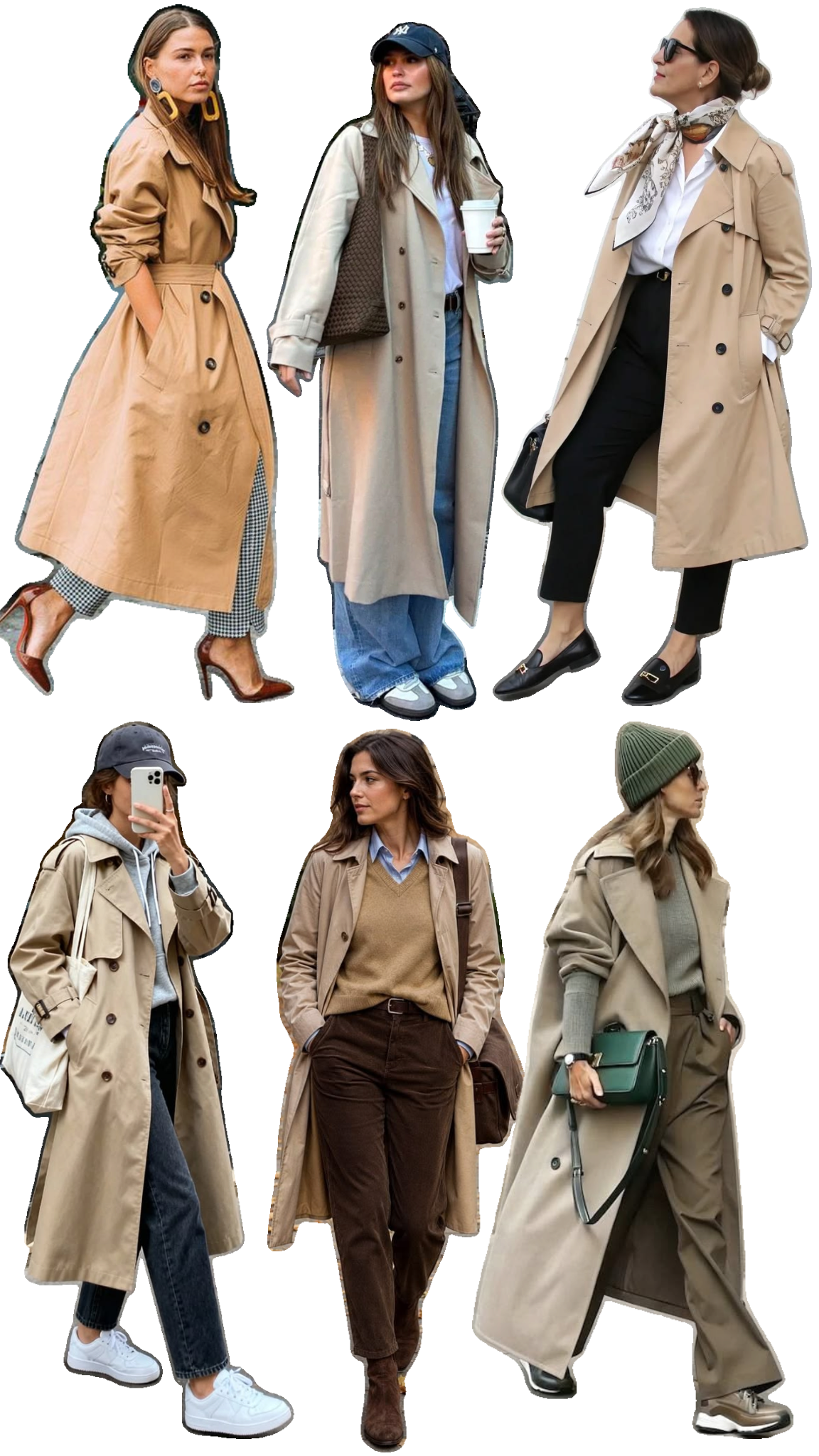
Pinterest Collage
How Do You Know If Your Trench Coat Is the Right Length?
A trench may look perfect on a hanger and feel completely different once you wear it with your own clothes. Whenever possible, try it with the jeans, trousers, or skirts you actually expect to wear underneath it. Do the same with your usual shoes. A coat tried on over leggings and sneakers in a fitting room may create very different proportions once you wear it with wide-leg pants and loafers.
Look carefully at where the hem falls. If it ends exactly at the widest point of your hips or calves, moving a few inches higher or lower may create a cleaner line.
Then close the coat, sit down, and walk around. Make sure the shoulders remain comfortable, the buttons do not pull, and you can move easily when the belt is tied.
I also recommend looking at yourself from the side and while moving, rather than only standing straight in front of a mirror. Taking a quick photo with your phone can be surprisingly revealing.
Which Trench Coat Length Works Best With Jeans?
Because jeans are such an important part of my own wardrobe, this is one of the combinations I pay the most attention to.
With straight-leg jeans, almost every trench length works. A short version exposes more of the jeans and creates a sharper proportion, while a mid-length coat is extremely easy to wear day to day. A long trench gives a simple denim outfit much more presence.
With wide-leg jeans, I like two opposite approaches: either a sufficiently short trench that keeps the full shape of the pants visible or a long coat worn open so the two pieces create continuous vertical lines.
The mid-length trench remains the safest option when you want something practical without adding too much fabric around the legs.
And if you enjoy using denim as the foundation of your fall wardrobe, my guide on how to style a denim shirt for women offers more ideas for creating polished outfits without making denim feel overly casual.
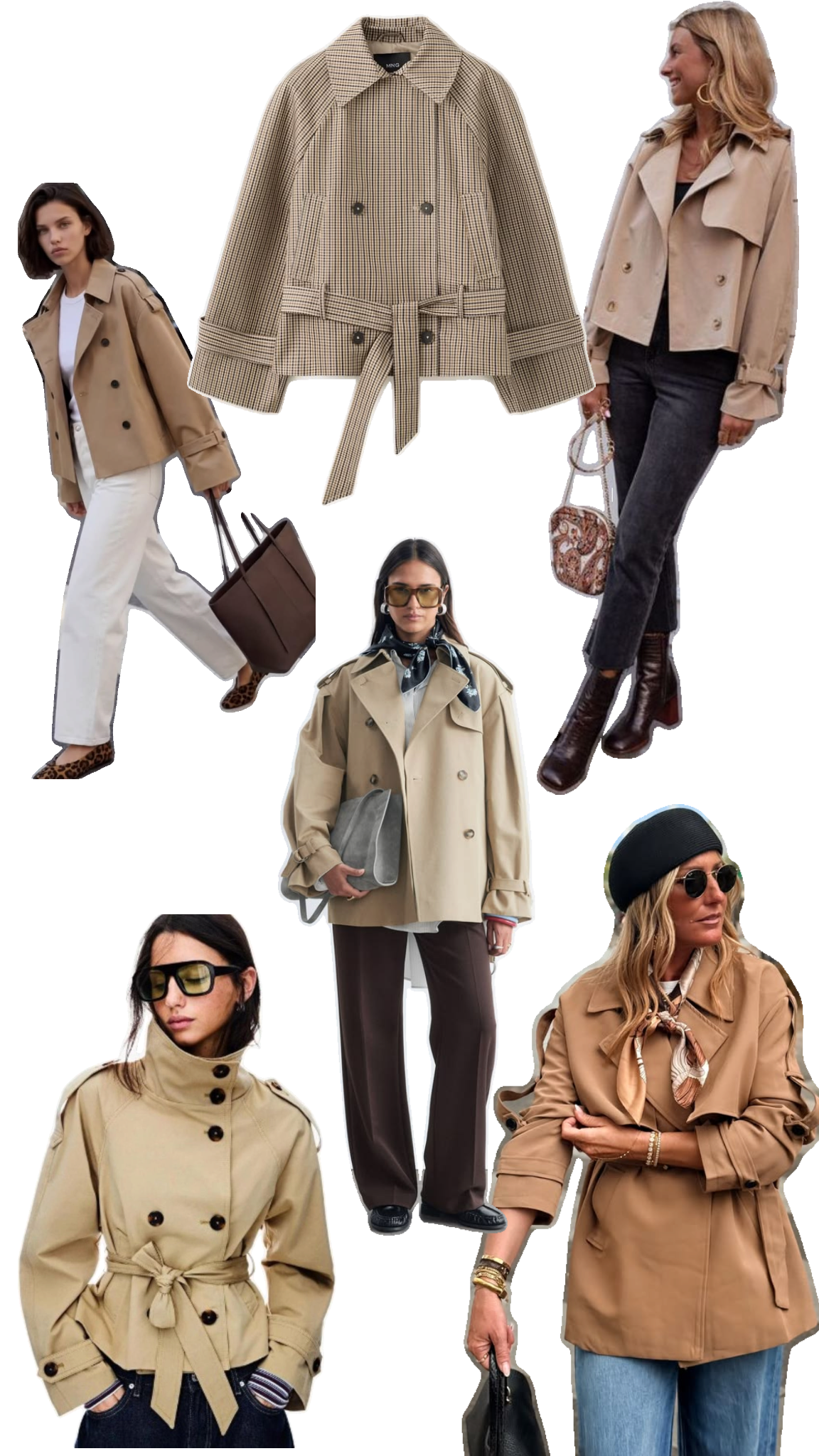
Pinterest Collage
What Trench Coat Length Works With Wide-Leg Pants?
Wide-leg tailored pants need a little attention because both the coat and trousers contribute volume.
A cropped or short trench can work almost like a jacket, allowing the full line of high-waisted trousers to remain visible.
A long trench can be equally elegant when worn open, particularly when the fabric has enough movement to follow rather than compete with the pants.
The mid-length option is often the easiest compromise for everyday wear, because it adds coverage without surrounding the legs with too much additional fabric.
Also check the trouser hem. Pants that are too long can make the silhouette appear heavier, especially under a long coat. A properly adjusted hem keeps the line cleaner and more intentional.
What Trench Coat Length Should You Wear With a Dress or Skirt?
This is where I become more particular about proportions. When a dress or skirt is involved, two hemlines are competing for attention, and I generally find the result more elegant when the trench ends at roughly the same level as the dress or skirt, or falls slightly below it.
With a short dress, a mid-length or knee-length trench offers a little extra coverage while maintaining a balanced silhouette.
With a midi skirt or long dress, I prefer a longer trench worn open. It maintains continuity and avoids chopping the outfit into too many horizontal sections.
Personally, I am less convinced by a dress or skirt that extends noticeably below a much shorter trench. The result can make the silhouette look fragmented rather than fluid.
Shoes matter too. Loafers, ballet flats, Mary Janes, and boots all change the visual balance, particularly with midi lengths, so this is another situation where I would try on the complete outfit rather than judge the trench in isolation.
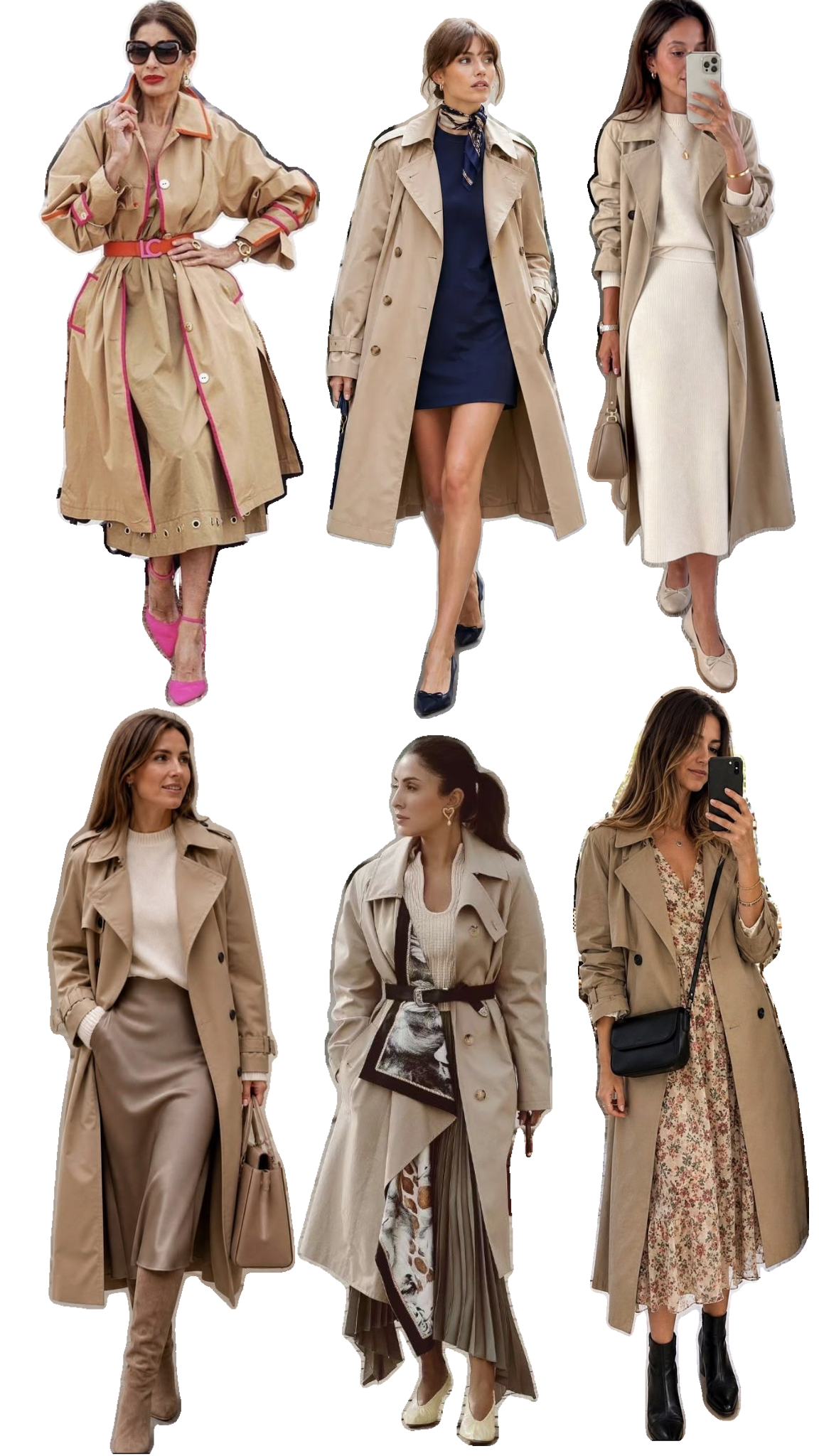
Pinterest Collage
Do You Need to Consider Rain When Choosing a Trench Coat?
Yes but rain is only one part of the decision. A trench coat is not something you need to reserve for wet weather. It is first and foremost a transitional outerwear piece, and many women wear it on completely dry days simply because of the structure and elegance it brings to an outfit.
If you walk frequently, live somewhere with regular showers, or genuinely want extra weather protection, however, length becomes more relevant. A knee-length or long trench will naturally cover more of the clothes underneath than a cropped one.
If you primarily drive or think of your trench as a lightweight fall jacket, a short or mid-length version may be perfectly sufficient.
Fabric matters just as much. “Trench coat” does not automatically mean waterproof. A cotton trench may have a tightly woven fabric, but unless it has been treated or specifically designed for wet weather, it should not be assumed to withstand sustained rain.
If real rain protection matters to you, look for the word waterproof, along with technical fabrics such as coated nylon or polyester, laminated membranes, or some waxed cottons.
A water-resistant or water-repellent trench is different: it may handle a brief shower, but the fabric can eventually become wet if exposure continues.
So choose the coat according to the way you genuinely intend to wear it, rather than assuming every beige double-breasted coat serves the same purpose.
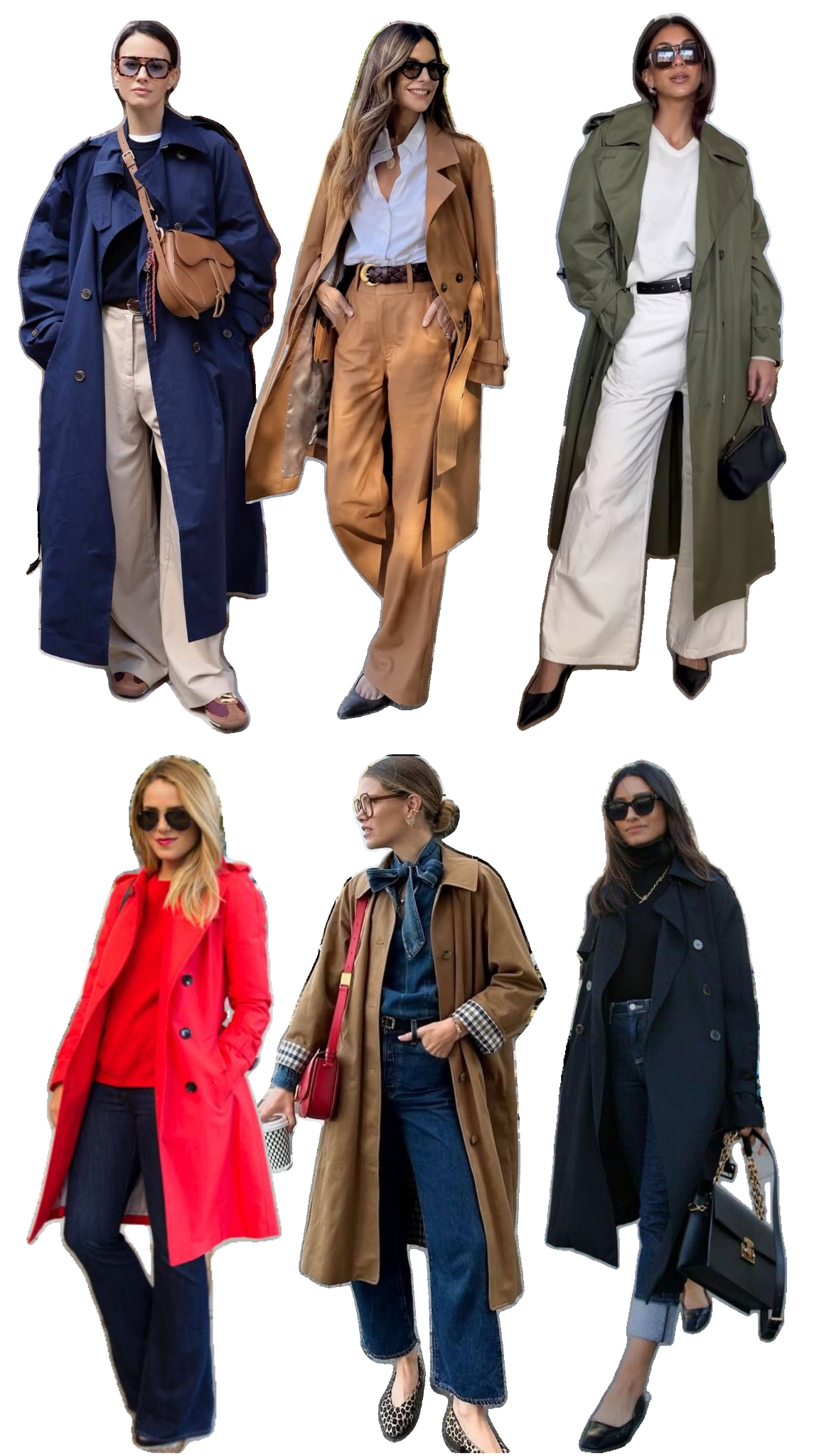
Pinterest Collage
Short, Mid-Length or Long Trench Coat: Which One Should You Choose?
There is no single perfect trench coat length. The best choice is the one that works with your proportions, your personal style, and the way you actually live.
A cropped trench gives a classic coat a more fashion-forward feel. A mid-length style offers an excellent balance between coverage and practicality. The traditional knee-length trench remains the most adaptable choice, while a long version brings movement, presence, and greater protection.
Right now, the Vania by Gérard Darel fits particularly well with what I want from a trench: enough length to feel elegant and covering, but not so much that the coat becomes cumbersome in everyday life.
Before choosing yours, I would look beyond labels such as “short,” “three-quarter,” or “long.” Pay attention to the actual hemline, the fabric, your shoes, the trousers and skirts you wear most often, and how the coat looks when you move.
The best trench is ultimately the one you reach for again and again because it feels like part of your wardrobe rather than a trend you are trying to wear.
And you? Which trench coat length do you prefer?
Let me know in the comments. I always enjoy reading your thoughts.
NB : Some links in this article are affiliate links. If you click and make a purchase, I may receive a small commission at no extra cost to you. It’s a lovely way to support my blog and my work. Thank you so much.
See you soon,
Sandrine